Category Archives: Symposium programme

ISS Utilisation Exhibition

 The ISS Symposium 2012 was a unique occasion to share scientific research from the Space Station. A showcase of these results could be seen in the ‘ISS Utilisation Exhibition’ at the symposium.

The exhibit gave basic information on experiments conducted in the orbital outpost, leading to spin-offs for the benefit of people on Earth. Industry presented their state-of-the-art products and technologies based on Station research.

The exhibition was divided into five themes with examples of experiments and products for each theme:

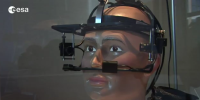
  •  Non-invasive medical diagnostics: 3D Eye Tracking Device, HealthLab, ThermoLab, Electrical Impedance Tomography (EIT), Galileo Vibration Trainer, Long Term Medical Survey (LTMS), Hand Grip Dynamometer.
  • Biomedicine: CAMDASS, Portable Pulmonary Functioning System (PPFS), Robotized Tele-echography, Human Respiratory Analyses (FIPEX), Bone and muscle modelling, Flywheel technology.
  • Exobiology & Space Environment: Expose, Matroshka, Solar.
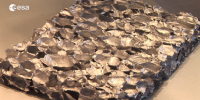
  • Material Science: Geoflow, X-Ray diagnostics, Blades & Foams, FOAM-C.
  • Biology: KI Biology Experiment Hardware, European Modular Cultivation System (EMCS), Plasma Crystak & Plasma Medicine.

You can download a summary of the exhibition in pdf or visit the exhibit through this visual tour:

Get the flash player here: http://www.adobe.com/flashplayer

ISS Symposium 2012 summary

Three days were devoted to research benefits of the International Space Station (ISS) and its future at the first ISS symposium in Berlin 2-4 May. Many impressive results were presented and the message was clear:  scientific research on the Space Station is increasing our knowledge of the world and creating tangible benefits for humankind - right now. This is only the beginning because the Space Station will continue to operate for at least eight more years as the only permanent weightless laboratory available to scientists. Nobody knows exactly what results the Station will produce but the future is promising.

ISS director for NASA Mark Uhran said in his presentation that many people underestimate building and maintaining a large Space Station. “It is surely as big a challenge as building the pyramids in Egypt but fortunately it did not take as long” he said. Space Station construction completed in 2010 allowing more time to be spent on research. In only two years of normal operation the results are remarkable.

Highlights of the symposium and research results cover fundamental science as well as industrial, medical and consumer applications.

Science for the benefit of humankind

(more...)

Presentation slides available

That concludes the ISS Symposium 2012. A replay of highlights will be available next week.

Presentation slides are available for many speakers of day 1 and 2 and have been added to their summary post.

Use the programme page and search function to find the right presentation.

You can also download a ZIP archive of all presentation PDF files here.

Super cool! Alpha Magenetic Spectrometer video as seen at ISS Symposium Berlin

The **excellent** video shown as part of Dr. Stefan Schael's presentation on the AMS-02 experiment at the symposium. Credits: widlab More info via the AMS02 Collaboration site.

Editor's note: Was also screened at the New York - Imagine Science Film Festival - http://imaginesciencefilms.com

ISS Symposium 2012: Day 2 highlights

The ISS Symposium 2012 has completed Day 2. The three-day symposium is covering case studies in fundamental and applied research and actual or potential spin-offs for the benefit of everyone.

Loading...


Roundtable: physical research in space and on ground

Editor’s note: These brief extracts are paraphrased from the live webcast and may not be fully correct.

  • Chair: Mike Cruise, ESA-PSWG Chair
  • Hans Fecht, Chaired Professor and Director, Institute of Micro and Nanomaterials, Ulm University
  • David John Jarvis, Head of New Materials & Energy Research, ESA
  • Cécile Gehin-Delval, Research Scientist Nestlé Research Centre
  • Koichi Nishino, Professor at the Departement of Mechanical Engineering, Yokohama National University
  • Mark Uhran, ISS Programme Director, NASA
  • John Banhart, Professor at the Technical University, Berlin, Germany

  • Nestlé, known for coffee and chocolate bars is using ISS research to... improve their products. Foams can be found on coffee, in chocolate mousse and in pet foods for example. Gravity on Earth causes foams to degrade. Understanding foam stability through research on ISS will improve the shelf life of your chocolate mousse.
  • NASA's Mark Uhran shows how material research is evolving. The past 25 years was spent surveying new materials. 15 years ago research was done on the Space Station on how metal alloys are formed. Two years ago this research resulted in a new alloy that is twice as strong. By the end of this year a new iPhone will use this technology on the mass market.
  • Metal foams, though not as tasty as chocolate foams, offer many benefits. Metal foams are much harder and lighter. Typical uses are in lightweight cranes or absorbing energy in car crashes. All foams are unstable so making metal foams is not an easy process. Gravity and temperature differences cause foam bubbles to burst. Research on the ISS has already allowed foams to be created on Earth using pressure instead of chemical agents leading to more pure final materials.
  • The 'Satnav problem' is presented: as soon as space-based technologies become available to users, we forget that they came from space, how do we overcome this?
  • Mark Uhran: We can work far more quickly to test new technologies on the ISS. We should use these opportunities to develop new products.
  • Mike Cruise's  leaving words : "If you think knowledge is expensive, try living in ignorance for a while."

Round-table discussion

Heads of Agencies or delegates at ISS Symposium Berlin. L-R: Kiyoshi Higuchi, Vice President, JAXA; Mark Uhran, ISS Director, NASA; Alexey Krasnov, Director of Human Spaceflight Programme Department, Roscosmos; Gilles Leclerc, Director General, Space Exploration, CSA; Jean-Jacques Dordain, ESA Director General.

Watch a replay:


ISS partner heads in roundtable

Round table

Heads of Agencies or delegates at ISS Symposium Berlin. L-R: Kiyoshi Higuchi, Vice President, JAXA; Mark Uhran, ISS Director, NASA; Alexey Krasnov, Director of Human Spaceflight Programme Department, Roscosmos; Gilles Leclerc, Director General, Space Exploration, CSA; Jean-Jacques Dordain, ESA Director General.

Watch a replay:

 Editor’s note: These brief extracts are paraphrased from live webcast and may not be fully correct.

ISS partner heads in roundtable

  • JAXA Kiyoshi Higuchi: KIBO module experiments paid for by 60% by Japanese government. "With the ISS, we will be able to contribute to solving the issues of humanity and the Earth." Important to reduce operational costs and increase efficiency. Ensure that humans will be able to explore further.
  • NASA: Space Station is a stepping stone to further human exploration. We all have one goal: interplanetary human space flight
  • Roscosmos: First impulse was curiosity. Operating such a big structure as the ISS is a great experience. Working with NASA on Mir was like two different universes. Working together on ISS has bought us together.
  • CSA Gilles Leclerc: Mix of research. Faces challenge of proving itself in the short term, whereas projects are long term. Requires courage and vision.
  • ESA: Operations are also a large part of ISS use. Full utilisation only started 2 years ago. Already as mentioned we have lots of health research. Resources on ISS are scarce. Any benefits from work done on ISS in these terms can be directly applied on Earth. I like the present partners but welcome more partners.

Brief summary: DLR Chairman Johann-Dietrich Wörner opening remarks 2 May 2012

Editor’s note: These brief extracts are paraphrased from live webcast and may not be fully correct.

Download the presentation slides in PDF: Welcome Address

Watch the replay:

  • Why are we doing this? The global challenges that we face offer many reasons. But the ISS supplies a definite curiosity. Space can give answers to some questions we have.
  • Global space cooperation started in Germany with the film Orion, predicting the international character of space travel.
  • We will use ISS until 2020 and beyond. Target maximum scientific exploitation. We will make 5 ATVs and possibly more, but in what form?
  • Creation of a Multi Purpose Concept Versatile Service Module, i.e. a versatile module. A module that can be used for several different purposes.
  • Legitimation pressure. Don't we have enough problems on Earth? Together we can show that the ISS is showing a large variety of value for the public.
  • Invention to innovation, direct -- like sending a man to the moon. Or the 'Teflon-pan effect', although not a benefit from space research, everyone understands what is meant. When conducting fundamental research we need to think of the Teflon effect. Think in advance of potential benefits of research.
  • Example: AMS-02 started from curiosity. When Einstein though of relativity, nobody thought of satellite navigation; however without it satellite positioning would not be possible. Who knows what AMS-02 will bring?

Brief summary of ESA DG Jean-Jacques Dordain 2 May 2012

Editor's note: These brief extracts are paraphrased from live webcast and may not be fully correct.

Watch a replay of this presentation:

    • It is time to share the benefits together. International partnership is already a great benefit. The partnership formed with the ISS agencies will last longer than the ISS will. Cooperation is much slower than competition, but more sustainable.
    • Problems were overcome together. The result today is worth the effort. This is the right time to hold the ISS symposium. We have an astronaut on the ISS. The Mars500 mission finished recently. We launched ATV-3 on 23 March.

z

  • This symposium will focus on results and benefits. We are using the Space Station more and more for research. We are using the ISS as a platform for fast information on natural disasters and to track ships.
  • The ISS is a model for the future of humanity.
  • Exploring beyond planet Earth includes three stages: low Earth orbit, the Moon and Mars. ESA is developing plans to explore these destinations with space agency partners.
  • Everything we do in space is focused on planet Earth.
  • Space is not a cost -- space is an investment. 750 jobs have been created by young entrepreneurs.
  • I am fully committed to ISS. Missions are our 'raison d’etre'. We need to shorten the time between our missions. We need to say yes to the ISS, but we need to manage the ISS in view of a wider part of future exploration.