
Minimising the environmental impact of space activities is no longer optional—it is essential. As space systems become increasingly integrated into our daily lives, ensuring their sustainability is critical to align with European environmental goals and global climate commitments. To support this mission, ESA has published the second issue of the Space System Life Cycle Assessment (LCA) Handbook, a comprehensive update to the original guidelines released in 2016 (watch the webinar).
Why an Updated Handbook?
Since 2012, ESA has pioneered the application of LCA to space projects, assessing the environmental footprint of launchers, missions, materials, and processes. Over a decade of experience has revealed the unique challenges of applying LCA to the space sector: low production volumes, long development cycles, specialised materials, and impacts on environments beyond Earth, such as direct emissions into the upper atmosphere.
The new handbook consolidates this knowledge into a robust framework, enabling industry and research partners to perform LCAs consistently and communicate results transparently. It also introduces improved methodologies, dedicated databases, and best practices for ecodesign helping engineers make informed decisions from the earliest design phases.

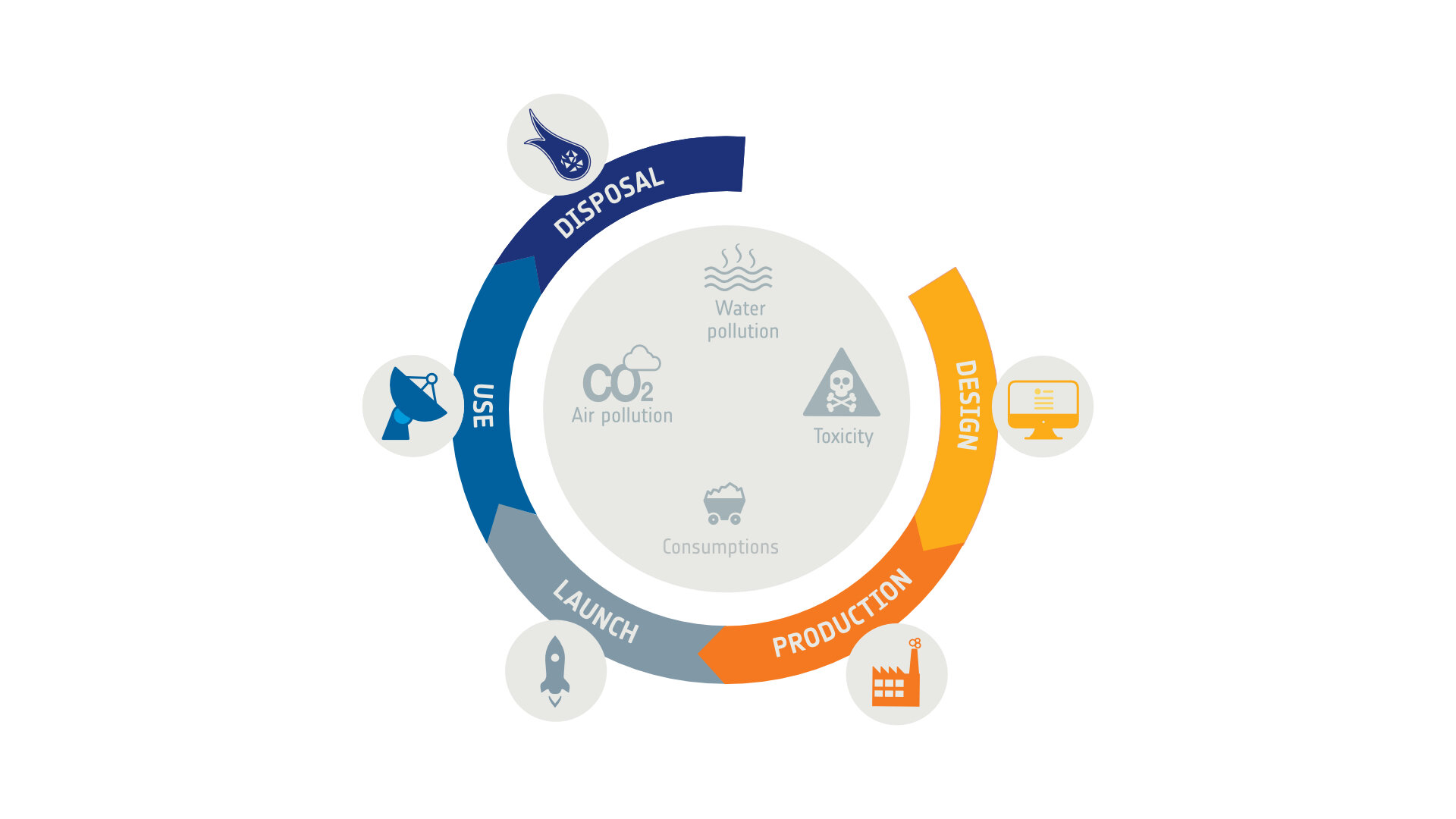
In the handbook: Space sector LCA activity breakdown and level 1 definitions
What’s Inside the Handbook?
The handbook provides technical guidelines for conducting space-specific LCAs, structured to support practitioners at different levels:
- Mission Level – Comprehensive “cradle-to-grave” analysis of entire space missions.
- Segment Level – Detailed methodologies for space, launch, and ground segments.
- Equipment Level – “Cradle-to-gate” assessments of components, materials, and processes.
Key highlights include:
- Space-Sector Specificities: Adjustments to conventional LCA methods to account for unique space-sector factors such as atmospheric emissions, testing campaigns, and R&D impacts.
- Methodological Framework: Step-by-step guidance on defining functional units, system boundaries, data collection, and impact categories.
- Data Quality and Reporting: Presentation of the new and simplified Data Quality Rating (DQR) system to ensure transparency and reliability.
- Ecodesign Integration: Practical approach to reduce environmental impacts through iterative design trade-offs, supported by LCA or simplified LCA.
- Communication Guidelines: Recommendations to avoid misleading claims and greenwashing when sharing LCA results.
- Annexes and Examples: From simplified LCA methods to atmospheric impact modelling and software modelling guidelines.

Example from the handbook: System boundaries of a space mission
Why It Matters
The updated LCA Handbook is more than a technical document—it is a cornerstone for sustainable space engineering. By embedding life cycle thinking and ecodesign principles into projects, ESA and its partners can:
- Identify environmental hotspots early in the design process.
- Compare technologies and design options based on environmental performance.
- Report better on environmental impact of space activities
Access the Handbook
The Space System LCA Handbook (ESSB-HB-U-005, Issue 2) is now available. It is a major step toward harmonising environmental assessments across the European space sector and ensuring that space remains a driver for sustainable innovation.

Discussion: no comments