
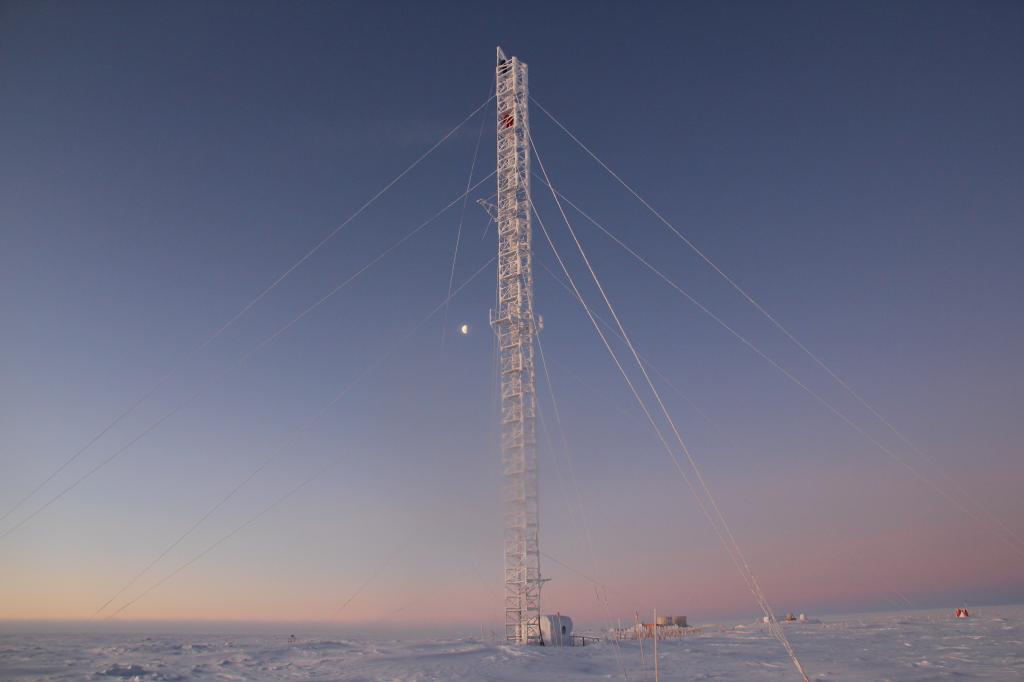
Doing my job… my colleague and I cleaning instruments from the snow. Credits: P. Robert
While waiting for this year’s Concordia crew to start sending updates, Angelo Galeandro sent us his experience of spending almost a year at the remote research station:
My story begins in July 2010, when a colleague of mine asked me if I was interested in spending a full year in Antarctica. Actually, she was joking, but I took her seriously. A research team was looking for someone to monitor their equipment during the winter in Concordia, Antarctica. I presented myself and, a few months later, I realised one of the greatest dreams of my life. For the first time walked on the ice of the White Continent of which I had only read about in books and seen in some documentary before.
The emotions and feelings I experienced from the moment I left home after saying goodbye to my loved ones, over the entire period of my stay in Antarctica and beyond, have been so many that it is difficult to find the right words to describe them in the space of few lines.
Svolgendo il mio lavoro…io ed il collega ripuliamo gli strumenti dalla neve. Credits: P. Robert
La mia storia comincia nel luglio 2010, quando una mia collega del CNR mi chiese se fossi interessato a passare un intero anno in Antartide. Lei scherzava, io no. Un gruppo di ricerca cercava un candidato che potesse monitorare la loro strumentazione durante il periodo invernale a Concordia, in Antartide. Presentai subito la mia candidatura e, dopo alcuni mesi, realizzavo uno dei più grandi sogni della mia vita. Per la prima volta poggiavo i miei piedi sul continente bianco, di cui avevo solo letto sui libri e visto in qualche documentario.
Le emozioni e le sensazioni che ho conosciuto dal momento in cui ho lasciato casa salutando i miei cari, per tutto il periodo della mia permanenza in Antartide e oltre, sono state tante e tali che diventa difficile trovare le parole giuste per descriverle e riassumerle nello spazio di poche righe.
La prima sensazione strana che ho provato è stata la vista del sole alto nel cielo nelle ore notturne. Nonostante ciò non ho mai avuto problemi a dormire durante la stagione estiva.
La prima settimana sono stato ospitato nella stazione italiana “Mario Zucchelli”, una base situata sulla costa, dove il clima, soprattutto durante la stagione estiva, è molto meno rigido di quanto si possa immaginare. Ci sono giorni in cui la temperatura è superiore a 0°C e, essendo l’aria molto secca, se non c’è vento, si ha la sensazione di trovarsi a 15°C. “E’ incredibile”, pensavo, “ma l’Antartide non era il continente più freddo della Terra?”.
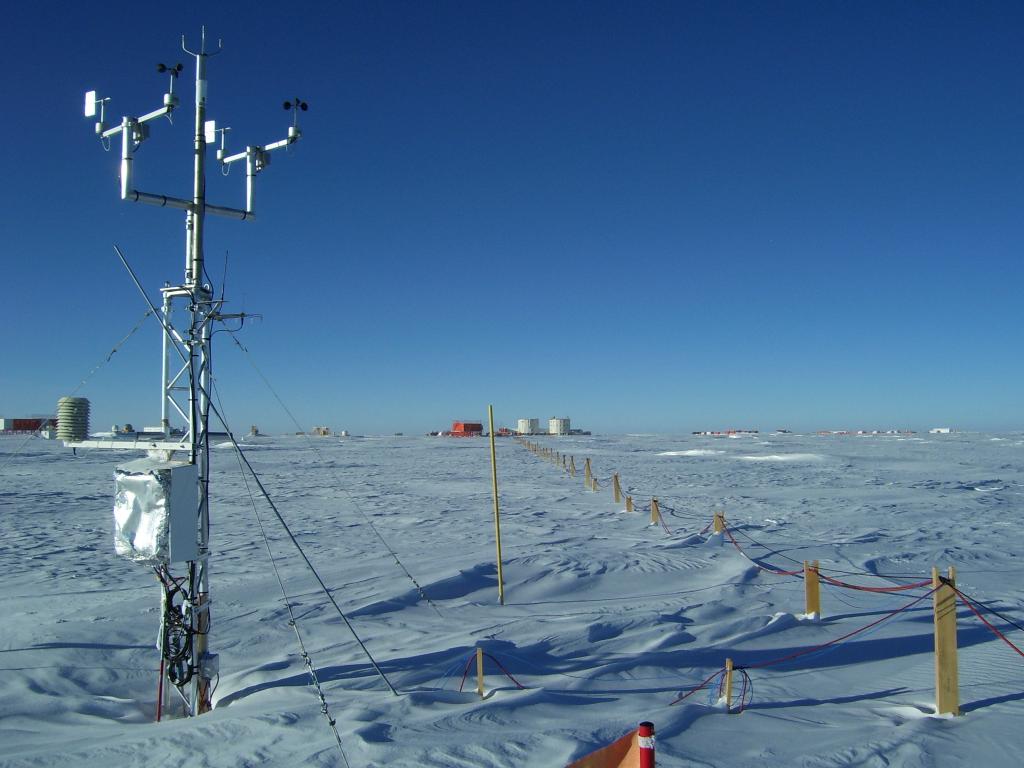
Per favore non spegnete la stazione meteo… Credits: A. Galeandro
Il 15 dicembre sono partito per Concordia, dove avrei vissuto nei successivi mesi. Oltre ad essere situata nell’interno del continente, la base si trova a oltre 3200 metri di quota, il che rende più difficili le condizioni ambientali a causa della bassa pressione e della minore presenza di ossigeno. La cosa che ricordo maggiormente è stata la sensazione del freddo provata non appena uscito dalla cabina riscaldata dell’aeroplano. Sono nato e vissuto nel Sud Italia, una regione calda, dove le temperature medie in inverno sono di 5-10°C, per cui fare la conoscenza improvvisa di temperature di -20°C è un’esperienza indimenticabile.
Durante la stagione estiva (da novembre ai primi giorni di febbraio) Concordia ospita fino ad 80-90 persone. La vita è frenetica, si lavora per gran parte del giorno e, per certi versi, non sembra di vivere in un luogo sperduto e difficilmente raggiungibile. Eppure, quando le persone cominciano ad andare via, anche se non si è creato un forte legame, la sensazione del “distacco” si avverte in una maniera ineguagliabile rispetto a qualunque altra situazione.
E così si arrivava all’inizio della stagione invernale. Il 7 febbraio partiva l’aereo con l’ultimo personale estivo. Io e altri 13 colleghi avremmo vissuto completamente isolati dal resto del mondo per circa 9 mesi. Sarebbe stata un’esperienza forte ed indimenticabile, comunque fosse andata. E, per molti versi, estrema, anche se per nulla paragonabile alle esperienze vissute dai primi esploratori antartici agli inizi del ‘900.
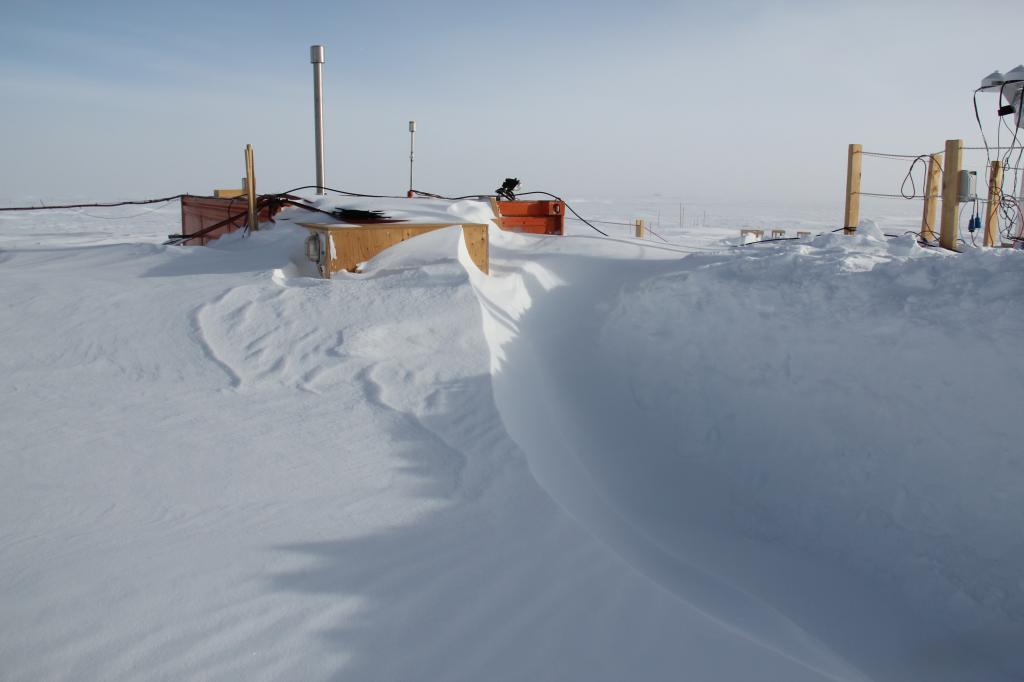
Ops, ho appena perso il mio riparo….la casetta dove svolgevo parte del mio lavoro, subito dopo una tempesta. Credits: P. Robert
Ero il responsabile della sezione “Fisica dell’Atmosfera” e dell’”Osservatorio Meteorologico”. La strumentazione da monitorare si trova all’esterno, a circa 1 km dalla base. Dovevo uscire ogni giorno, anche durante il periodo più freddo, quando la temperatura scendeva sotto -70°C che, in presenza di vento, era percepita come una temperatura sotto -90°C. Nonostante mi occupassi di un lavoro diverso dal mio solito, ho cercato di svolgerlo in maniera scrupolosa, conoscendo l’importanza della raccolta continua di dati per la formulazione dei modelli. Concordia non è certo l’ambiente ideale per il funzionamento degli strumenti di misura. La temperatura troppo bassa e la rarefazione dell’aria rappresentano condizioni di stress tali da compromettere un funzionamento duraturo, per cui è necessario intervenire sovente per riparare eventuali malfunzionamenti. Ho dovuto affrontare numerosi problemi, purtroppo non sono riuscito a risolverli tutti, ma posso considerare il bilancio della mia attività del tutto positivo, anche grazie alla collaborazione dei colleghi, che spesso sono accorsi in mio aiuto nelle condizioni più difficili. A tale proposito ricordo uno dei problemi più grossi che ho dovuto affrontare con il prezioso aiuto di Alessandro, l’elettricista, e cioè il ripristino della stazione meteorologica spentasi in seguito ad un black out. La strumentazione è situata all’aperto, il riparo riscaldato più vicino è a circa 250 m. Inoltre eravamo in giugno, in pieno inverno, la temperatura era di circa -65°C ed eravamo costretti a lavorare con lampade portatili di molto limitata autonomia (le batterie si esauriscono molto velocemente quando è molto freddo). In presenza di temperature così basse è molto pericoloso accendere un qualsiasi componente elettronico senza averlo preventivamente riscaldato. Per fare tutte le operazioni richieste, spesso, eravamo costretti ad operare senza guanti, inoltre dovevamo spesso recarci nel rifugio per riscaldarci. Così, per un lavoro che, in condizioni normali, avrebbe richiesto appena 10 minuti, abbiamo impiegato circa 4 ore!
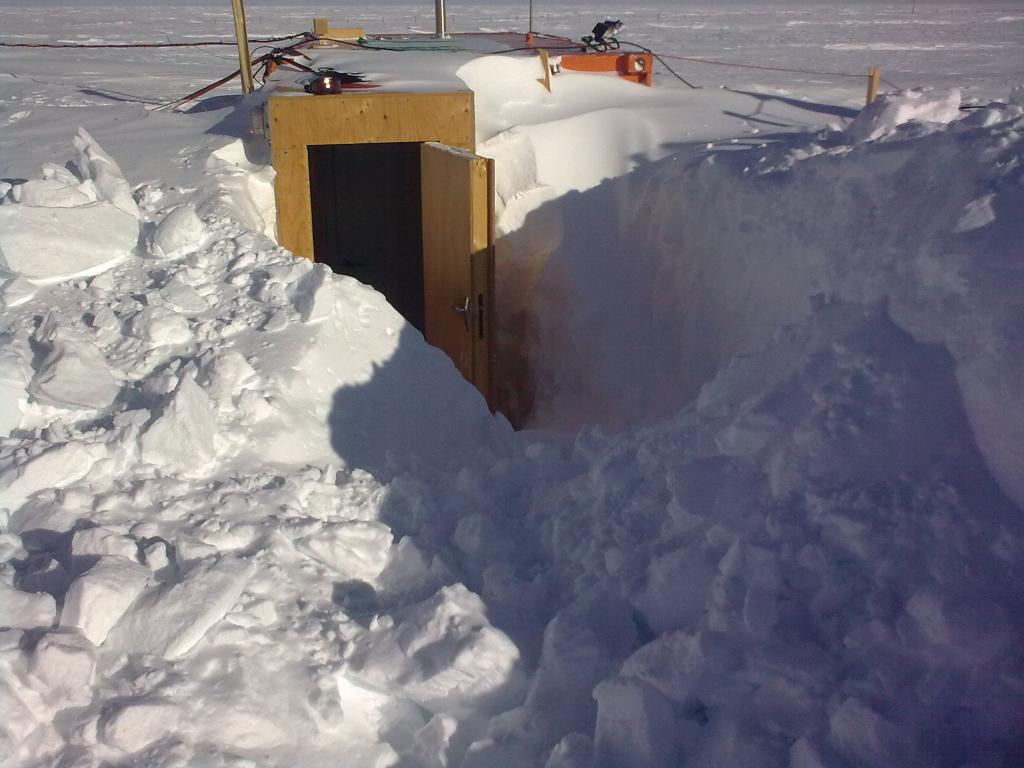
Oh, ecco qua! La mia casetta dopo un po’ di duro lavoro. Credits: A. Galeandro
Altra esperienza negativa legata al periodo invernale è stata la mia insonnia. Per quasi 50 giorni consecutivi, dalla fine di maggio fino a metà luglio, riuscivo a dormire appena 2-3 ore al giorno. Avevo perso ogni cognizione del tempo, ma nonostante ciò non ho mai perso il mio buon umore e la voglia di vivere a fondo quella magnifica esperienza.
L’inverno antartico offre però anche momenti di rara bellezza. Il paesaggio illuminato dal plenilunio è tra le cose più affascinanti da vedere. L’assenza di inquinamento luminoso, di polveri e la scarsissima umidità, inoltre, permettono una visione unica del cielo notturno e della Via Lattea. Sembra di essere proiettati nell’universo. Per non parlare delle aurore, scie luminose che attraversano il cielo da orizzonte ad orizzonte. Tutti spettacoli naturali che ti fanno provare la sensazione di essere infinitamente piccolo.
Vivere in un ambiente isolato e ristretto per periodi così lunghi mette a dura prova chiunque. Questo, unito al fatto che a Concordia convivono persone di nazionalità e quindi di usi e costumi diversi, facilita la nascita di “fazioni” nell’ambito del gruppo. La convivenza tra i vari componenti, quindi, ha avuto alti e bassi, ma, alla fine, il buon senso ha prevalso e non ci sono mai stati problemi irrisolvibili. La mia esperienza in tal senso è stata fortunatamente molto positiva, non avendo mai avuto problemi con nessuno. Ed è sempre molto piacevole, ancora adesso, sentire o vedere tutti loro.

L’equipaggio italiano invernale lascia Concordia. Credits: P. Perfetti
Difficile da credere, ma il periodo peggiore è coinciso con la fine dell’esperienza. Vedevo nell’arrivo del personale estivo un’invasione dei mie spazi da parte di gente estranea. Ormai Concordia era la mia casa, il mio ambiente. Ma tutto ha una fine. E così è arrivato il giorno in cui ho dovuto dire addio a quel luogo così inospitale, ma che ci aveva accolto per un anno rendendoci parte integrante di esso. Il contrasto di emozioni provate era fortissimo, da una parte la tristezza per la partenza, dall’altra la voglia di ritornare nei luoghi di sempre e rivedere i mie cari.
Mi mancavano anche alcune cose apparentemente molto banali, i colori e i profumi della natura, i versi degli animali, gli alberi, la pioggia e persino i temporali. Ma sarebbero ritornati anche il frastuono, l’inquinamento, i cellulari, le auto, le scadenze e la vita frenetica. Tutte cose di cui avevo fatto volentieri a meno per un anno ed a cui non è stato immediato riabituarsi.
Ho avuto un’esperienza splendida, indimenticabile, che mi ha reso più riflessivo e critico su quali siano davvero le cose importanti per me. Avverto molto la mancanza della vita a Concordia e, proprio per questo, se ne avrò la possibilità, vorrò ripetere l’esperienza, non aspettandomi di viverla allo stesso modo, ma essendo sicuro che sarà completamente diversa e quindi nuova.
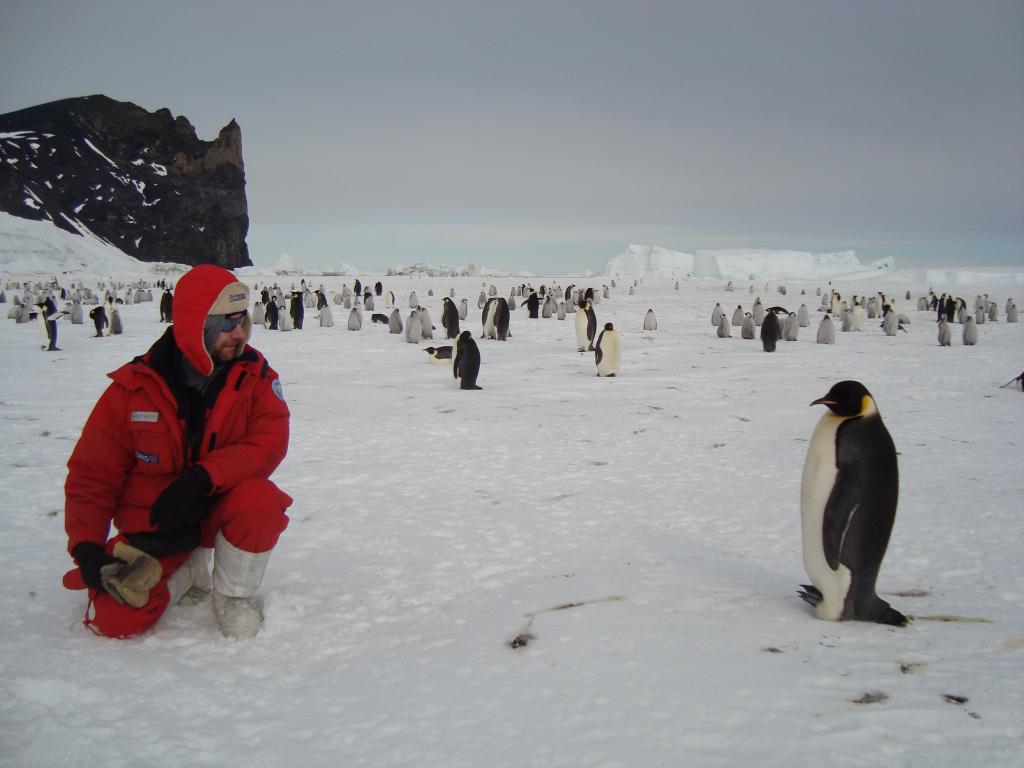
‘Chi è quello?’ avrà pensato il pinguino…il mio ultimo giorno in Antartide, Capo Washington, vicino alla Stazione Mario Zucchelli. Credits: A. Cesana
The first strange feeling that I had was viewing the Sun at night. Despite this, I never had trouble sleeping during the summer season. The first week I spent in the Italian station Mario Zucchelli, located on the coast, where the climate is much less harsh than you might imagine, especially during the summer season. Some days, the temperature rises above 0°C and, since the air is very dry, without wind you feel as if it is more like +15°C. “It’s amazing” I thought, “Am I really in Antarctica, the coldest continent on Earth?”.
On December 15 I went to Concordia, where I lived for the next few months. The base is located further inland and is situated at about 3200 m above sea level, so the environmental conditions are very challenging due to the low atmospheric pressure and reduced oxygen. The thing I remember most was the cold air on my face when I left the heated cabin of the airplane. I was born and raised in Southern Italy, a warm region, where average temperatures in the winter are around 5°C to 10°C, so sudden temperatures of -20°C was an unforgettable experience.
During the summer season (from November to early February) Concordia accommodates up to 90 people. Life is frenetic, working for most of the day and, in some ways, it does not seem to be a remote research base. Yet, when people start to leave, the separation is felt in a way incomparable to any other situation.
And so the beginning of the winter season arrived. On February 7, the last aircraft departed with the summer crew. 13 colleagues and myself would live completely isolated from the rest of the world for about nine months. It would have been a strong and memorable experience in its own rightand was in many ways too extreme, even if not comparable to the experiences of the Antarctic explorers in the early 1900s.
Please, do not turn off the weather station… Credits: A. Galeandro
I was in charge of Atmosphere Physics and the Meteorological Observatory scientific sections. The equipment I monitored is outside, about 1 km from the base. I had to go out every day, even during the coldest period, when temperatures dropped below -70°C which with windchill could be perceived as below -90°C. Although the jobs I did were different than usual, I tried to do them in a careful way, knowing the importance of continuous data collection to formulate models.
Concordia is not the ideal working environment for measuring instruments. The extremely low temperatures and the air rarefaction represent stress conditions for any long-lasting operation, so it is often necessary to repair malfunctions. Unfortunately I could not fix all of the malfunctions, but I imagine the balance of my activities is entirely positive, thanks to the collaboration of colleagues, who helped me in the hardest conditions.
Ooops! I lost the shelter… the shelter where I did part of my job just after a snow storm. Credits: P. Robert
I remember one of the biggest problems I fixed with the precious help of Alessandro, the electrician. The weather station was switched off due to a blackout. The equipment is located outdoors and the nearest heated shelter is about 250 m from there. It was June, in the middle of winter and the temperature was about -65°C and we only had a pair of portable lamps of very limited autonomy (batteries run down very quickly if it is very cold). It is very dangerous to turn on any electronic equioment in very low temperatures without preheating it. In addition, we were forced to work without gloves for some operations and we needed to return to the shelter periodically to keep us warm. So, for a job which would require just ten minutes under normal conditions, took about four hours in Concordia!
Oh, here it is… the shelter after some hard work. Credits: A. Galeandro
Another negative experience related to the winter was insomnia. For almost 50 consecutive days, from the end of May until mid-July, I slept just under three hours a day. I had lost all track of time, but despite that I never lost my good mood.
The Antarctic winter also offers moments of rare beauty. The landscape illuminated by the full moon is the most fascinating show I have ever seen.The absence of dust, light pollution and very low humidity allow a unique view of the nightly sky and the Milky Way. It seems to be directly linked to the universe. Not to mention the auroras, light trails across the sky from one horizon to the other. In front of all these natural wonders you feel infinitely small.
Living in an isolated and restricted environment for a long period is a severe trial for anyone. In addition, people of different nationalities and different customslive in Concordia, so the creation of factions within a group is easy. The coexistence of various components had its ups and downs, but common sense prevailed. My experience with human relations was very positive, I never had any problems with anyone and it is always a pleasure to hear or see all of my ex-winterovers.
It is hard to believe, but the worst period coincided with the end of the experience. I experienced the arrival of the summer researchers as an invasion of my personal space by strangers. Concordia was my home, my living environment. But everything has to end. And so the day when I had to say goodbye to that inhospitable place which had made us an integral part of it, finally came. The contrast of emotions was very strong, on the one hand the sadness of departure, on the other hand the desire to go back to familiar places and see loved ones.
Italian wintercrew leave Concordia. Credits: P. Perfetti
I missed also some things apparently trivial: colours, scents and sounds of nature, trees, rain and even thunderstorms. But I had to get used to noise, pollution, mobile phones, cars, deadlines and hectic life. It was not so easy to come back to normal life.
I had a wonderful, unforgettable experience which made me more reflective and critical about the things that are really important for me. I miss Concordia a lot, so, if I have the chance, I want to go back there, not expecting to experience the stayin the same way, but feeling sure that it will be a completely different and new experience.
Who’s that?” the penguin thought… my last day in Antarctica, Cape Washington, close to Mario Zucchelli Station. Credits: A. Cesana



Discussion: 2 comments
Though harsh due to the very low temperatures people are protected against the harmful space radiations by the Earth electromagnetic shield. This would not be the case in deep space or on the Moon, Mars or orbiting Venus for example. Until now nobody knows the consequences on the human body especially women and their menstrues.
Sono senza parole. Deve essere un’esperienza unica e affascinante come poche altre cose al mondo. Di sicuro richiede grande impegno e concentrazione ma immagino si venga ripagati ampiamente di tutti i sacrifici. Sarebbe un sogno poter visitare un luogo tanto affascinante come il Polo Sud. Chissà… un giorno magari!