Tag Archives: artemis

ATV-4 passes critical live-connection test

Docking simulation training at ATV-CC 26 January 2012. Credit: ESA/J. Harrod

Docking simulation training at ATV-CC 26 January 2012. Credit: ESA/J. Harrod

I spoke on 30 July with ESA's Marcus De Deus Silva, who works on the joint ESA/CNES ATV mission operations team at Toulouse. Marcus was responsible for planning and overseeing last week's System Validation Test (SVT) for ATV-4, the first one.

For any mission, SVT's are crucial! This type of test involves connecting the actual spacecraft (or its engineering model twin) to the actual mission control system developed at the control centre. Engineers can then send 'real' telecommands to the spacecraft, checking that it reacts as it should and that all flight procedures, processes and systems work as planned.

ESA's Artemis data relay satellite Credit: ESA

ESA's Artemis data relay satellite Credit: ESA

For ATV in particular, this means that the mission control team at ATV-CC in Toulouse were actually connected to ATV-4 mounted on a test bed at the Astrium manufacturing facility in Bremen, Germany. The team sent telecommands, tested communications to/from ATV, checked on-board internal communication of data between systems, confirmed that several safety systems were working and sent a test 'CAM' command (Collision Avoidance Manoeuvre).

The test ran for an exhausting, 06:00-21:00 day, and took months of team work to prepare, but the work paid off: "There were no unforeseen issues, and the test went very well," says Marcus.

The test involved representatives from the joint ESA/CNES mission control team, Astrium, Redu station, ESA's Columbus Control Centre, NASA Houston and NASA TDRSS.

There were several interesting aspects to this SVT.

"The connection was made via NASA's Tracking and Data Relay Satellite System (TDRSS) as well as via ESA's Artemis relay satellite," says Marcus.

NASA TDRS satellite Credit: NASA

NASA TDRS satellite Credit: NASA

"So the communication chain ran from ATV-CC via the International ISS Ground Segment connections to NASA mission control Houston (MCC-H), then to the White Sands antenna farm, up to a NASA TDRSS satellite, down to a ground receiver set up at Astrium Bremen and then into ATV-4 via a cable connection." Later in the test, communications were also run via Artemis via ESA's Redu station in Belgium.

He says it was necessary to run the SVT sending test commands to ATV-4 between periods of sending normal, routine telecommands to ATV-3 in orbit - via a different TDRSS satellite. "It was vitally important to keep the two mission control systems separate, for obvious reasons, so we put a lot of effort into this," says Marcus.

In fact, test commands to ATV-4 were sent only when the ISS (with ATV-3 docked) was on the opposite side of Earth, so there was a nice physical barrier - our planet - between the two ATVs.

A second SVT for ATV-4 is planned for later on, about ten weeks before launch and prior to ATV-4 fuelling in Kourou.

Artemis: the ATV whisperer

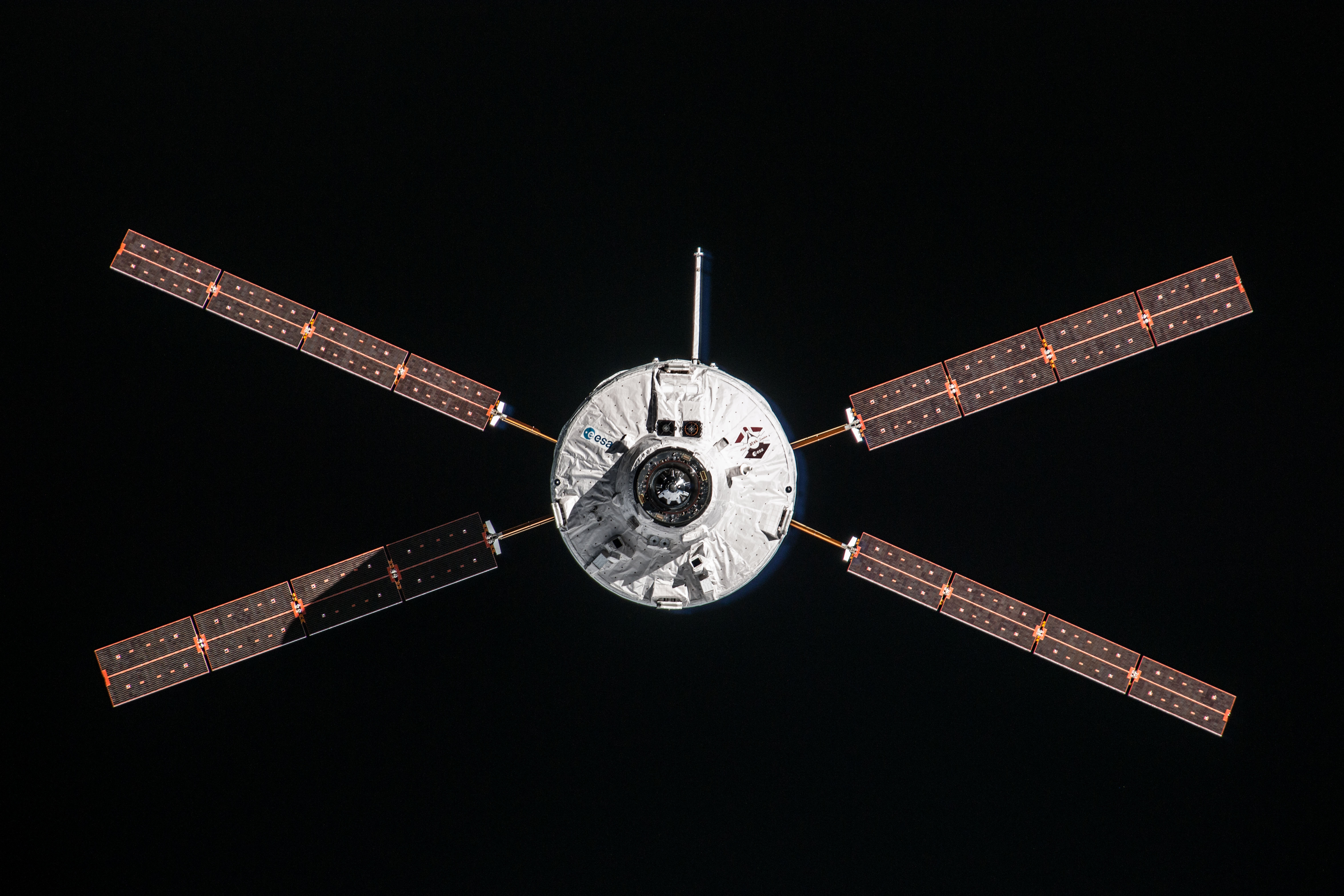
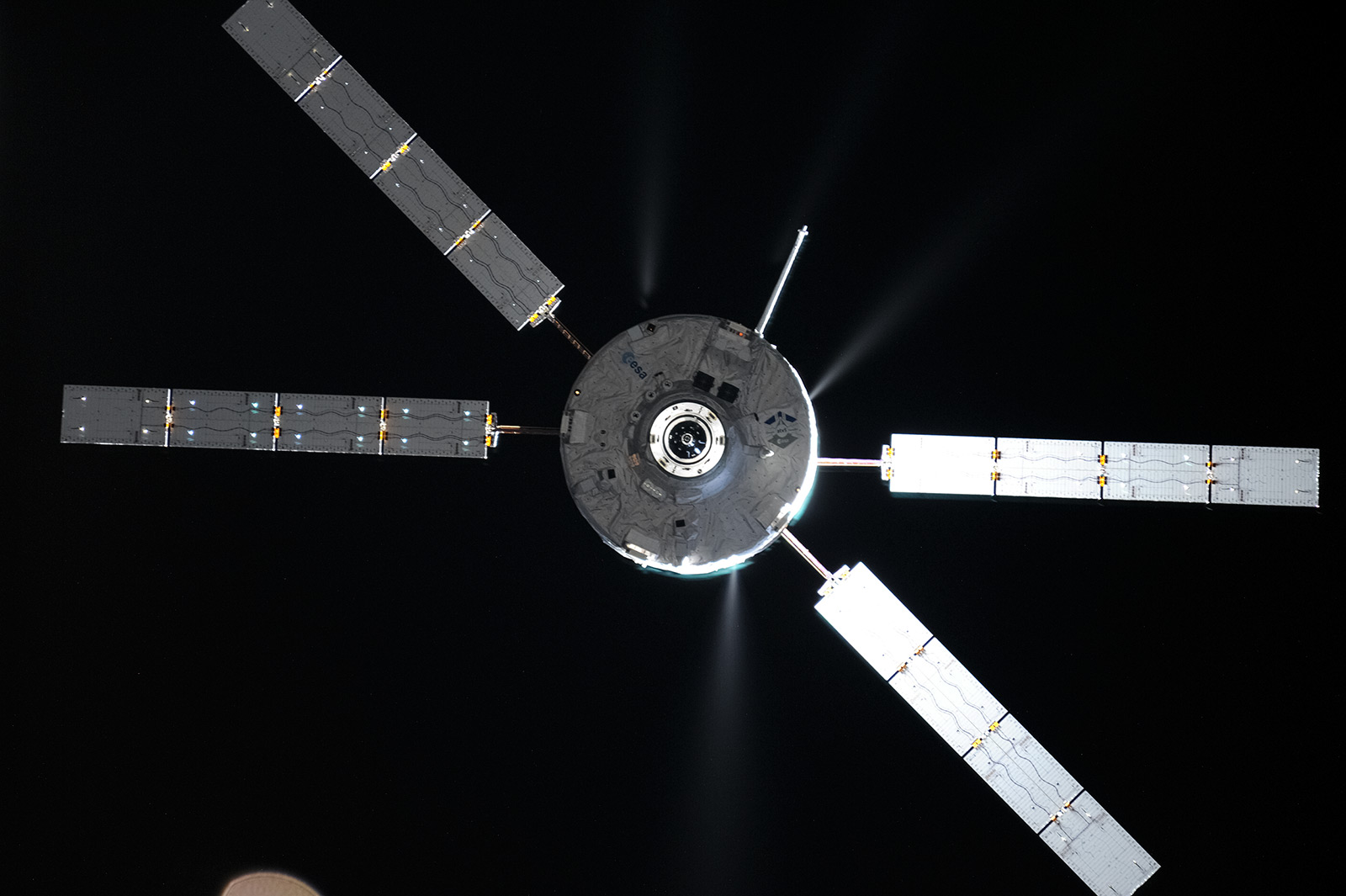
ESA's Artemis communications satellite is in action again to ensure the safe arrival of Europe’s third Automated Transfer Vehicle at the International Space Station with vital supplies.

Read full article via ESA web

Constant teamwork: scheduling ATV communications

ATV-CC engineers assess relay communication slots

We received a nice note yesterday from ESA's Jean-Michel Bois, Mission Director at ATV-CC, explaining details on the work involved with planning and scheduling communications with ATV-2.

Since ATV separated from its Ariane launcher on 16 February, all communications between ATV Control Centre (ATV-CC) in Toulouse and the vessel - receipt of telemetry and sending of telecommands - have been achieved via data relay satellites. Two relay satellite systems are in use: NASA's Tracking and Data Relay Satellite System (TDRSS) and ESA's own Artemis satellite.

Jean-Michel writes:

During the current 'phasing' period (i.e. manoeuvring so as to match the ATV orbit with that of the ISS), ATV is communicating primarily via NASA's TDRSS. ATV-CC is using Artemis as a back-up and as a complement when TDRSS communication slots are not available.

The TDRSS satellites can ensure communication during ATV's complete orbit (about once every 90 minutes) thanks to the fact that the system comprises multiple satellites. These are set in a ring in permanent geosynchronous orbit with at least one looking down on all regions the Earth (and on ATV as well!).

ESA's single Artemis satellite is also in geo-orbit, located at 21.4ºE, and offers around 40 minutes of continuous contact during each of ATV's orbits. ESA's Redu station, in Belgium, houses the Artemis mission control room (more details here).

At ATV-CC, it's the task of mission planners and the 'Ops Manager' on console to prepare and manage the communication coverage; this team works in very close coordination with their NASA and Redu counterparts.

(more...)

When Artemis talks, Johannes Kepler listens

Redu station: 13.5 m tracking antenna is part of ESA's ESTRACK network

Redu station: 13.5 m tracking antenna is part of ESA's ESTRACK network

There's a nice report this morning in ESA's Telecoms website on the role of the Agency's Artemis data rely satellite in ATV communications.

During phasing, rendezvous, docking, undocking and reentry, ATV primarily communicates via NASA's Tracking and Data Relay Satellite System (TDRSS) - and uses Artemis as backup. During the docked or attached phase, ATV uses Artemis as its main relay. A little later, we'll post a more detailed overview of all the ways in which ground controllers and astronauts can communicate with ATV.

After Ariane 5 lofts ATV Johannes Kepler into space on 15 February, ESA’s Artemis data relay satellite will be ready for action. Artemis will provide communications between Johannes Kepler and the ATV Control Centre (ATV-CC) in Toulouse, France. Hovering some 36 000 km above the equator at 21.4ºE, Artemis will route telemetry and commands to and from the control centre whenever the satellite sees the International Space Station or ATV. During every ATV-2 orbit, there is close to 40 minutes of continuous contact.

Full article via ESA