
From preparing our European Service Module for its first crewed flight to laying the foundations for sustained lunar exploration, 2025 was a year of steady progress for ESA and European industry on the road forward to the Moon.
January
The year began with a major milestone for Europe’s future on the Moon. ESA signed a contract with Thales Alenia Space in Italy to build the first lunar descent element for Argonaut, Europe’s lunar lander programme. Designed to deliver cargo such as science instruments, rovers and resources for astronauts, Argonaut will play a central role in long-term lunar exploration and represents Europe’s independent access to the Moon, from launch on an Ariane 6 rocket to landing on the lunar surface.
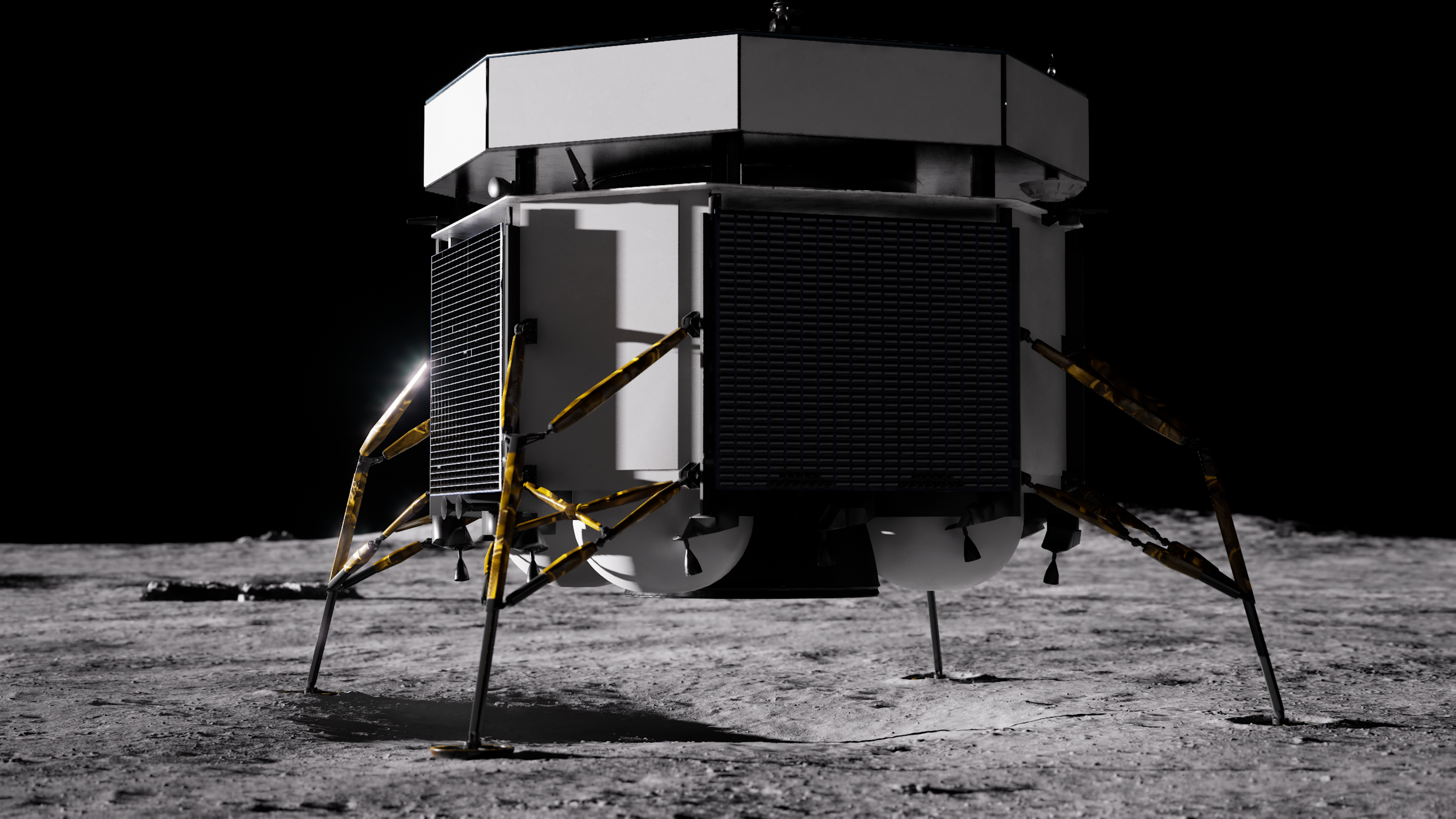
A render of an Argonaut lunar lander on the surface of the Moon.
Credit: ESA/EAC XR Lab-D. Reiter
In the LUNA Moon surface analogue facility at the European Astronaut Centre, preparations for future missions continued with a demonstration by our human-robot interaction team. Cutting-edge robots showcased how astronauts could one day work alongside or remotely control robotic assistants on the Moon, from the Gateway for example.
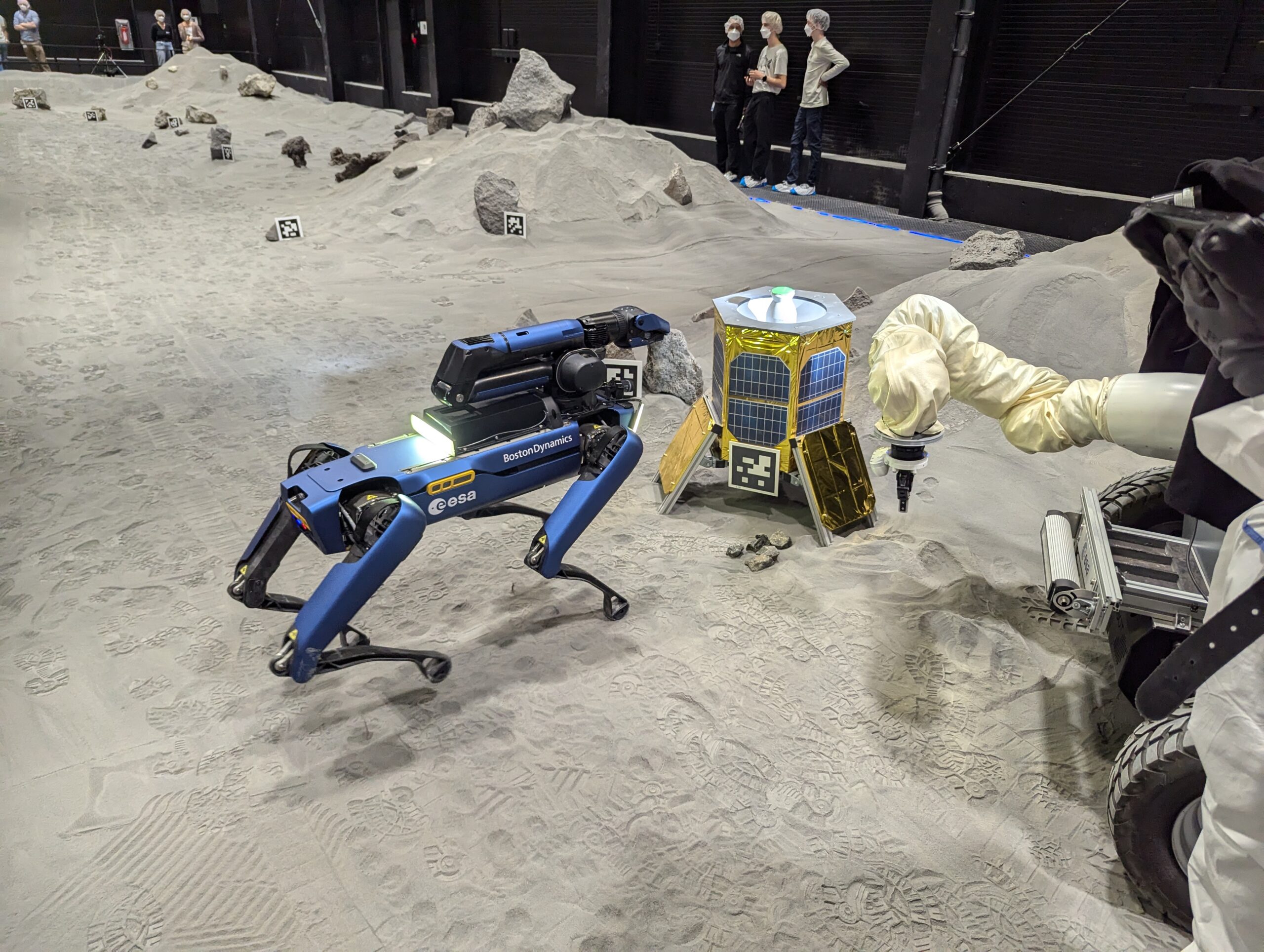
ESA’s robots get ready to rock at LUNA.
Credit: ESA-Robotics team
February
European industry shone in February as Thales Alenia Space in Italy completed NASA’s HALO habitation module for the lunar Gateway space station and shipped it to the United States. With both HALO and ESA’s Lunar I-Hab built in Europe, over half of Gateway’s modules are European-made. Media also received a glimpse of Lunar I-Hab as work progresses at Thales Alenia Space’s facilities in Turin.

The structure of the HALO habitation module for the Gateway in the Thales Alenia Space cleanroom in Turin, Italy, before leaving for the United States early in 2025.
Credit: Thales Alenia Space
Meanwhile, the Argonaut programme released its own mission patch – a symbolic step as Europe’s lunar ambitions move closer to reality.
Argonaut’s mission patch.
Credit: ESA-K. Lochtenberg
March
March saw a highly visible milestone for Artemis II with the installation of the European-built solar array wings on Orion’s European Service Module. The four seven-metre-long arrays, built by Airbus in the Netherlands, will provide the power Orion and its crew need during their journey around the Moon.
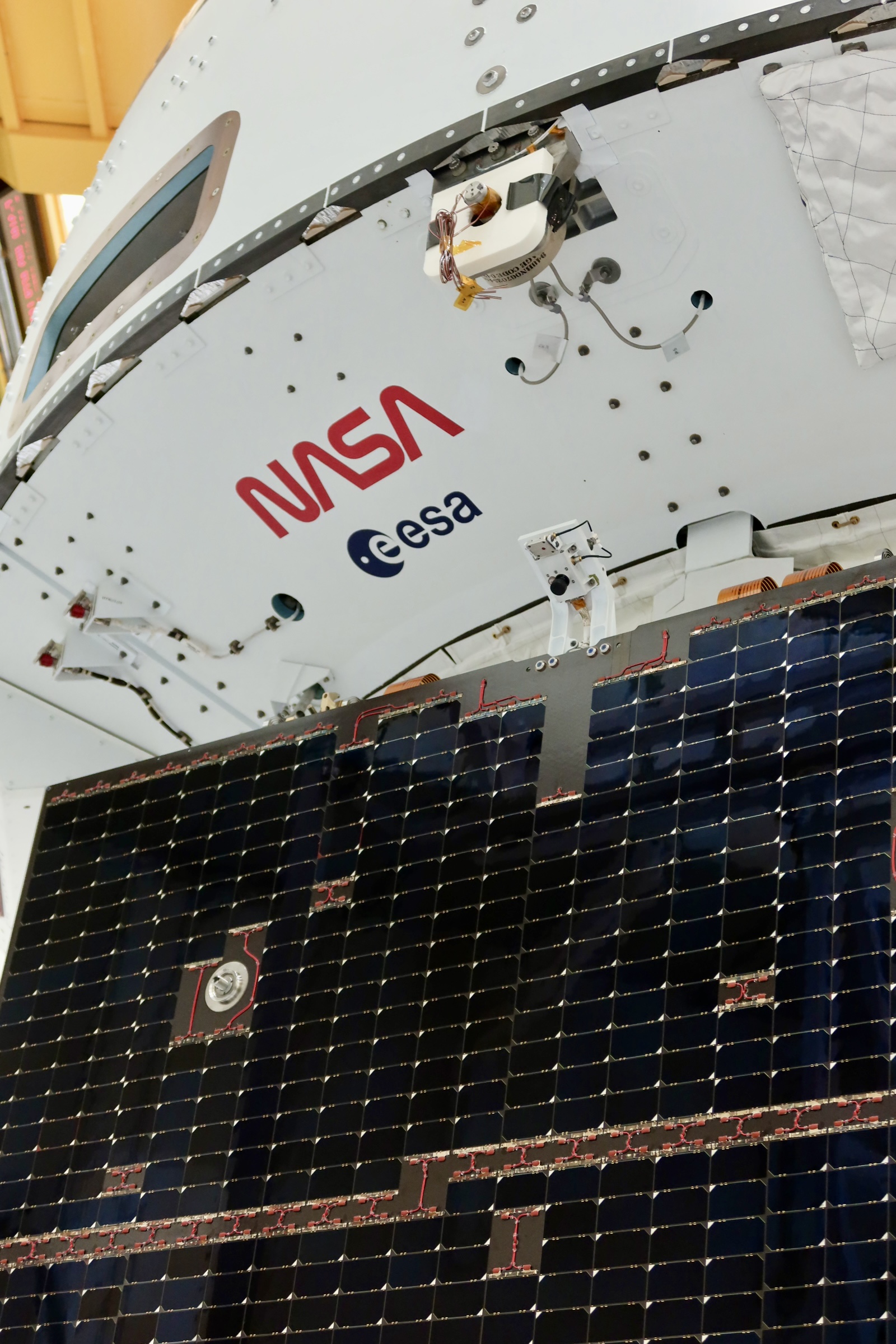
Solar arrays installed on NASA’s Artemis II Orion spacecraft inside the Operations and Checkout Building at NASA’s Kennedy Space Center, early March 2025. Credit: Lockheed Martin
At the same time, testing began at Thales Alenia Space in Cannes, France, on Lunar Link, ESA’s future lunar telecommunications element for the Gateway.
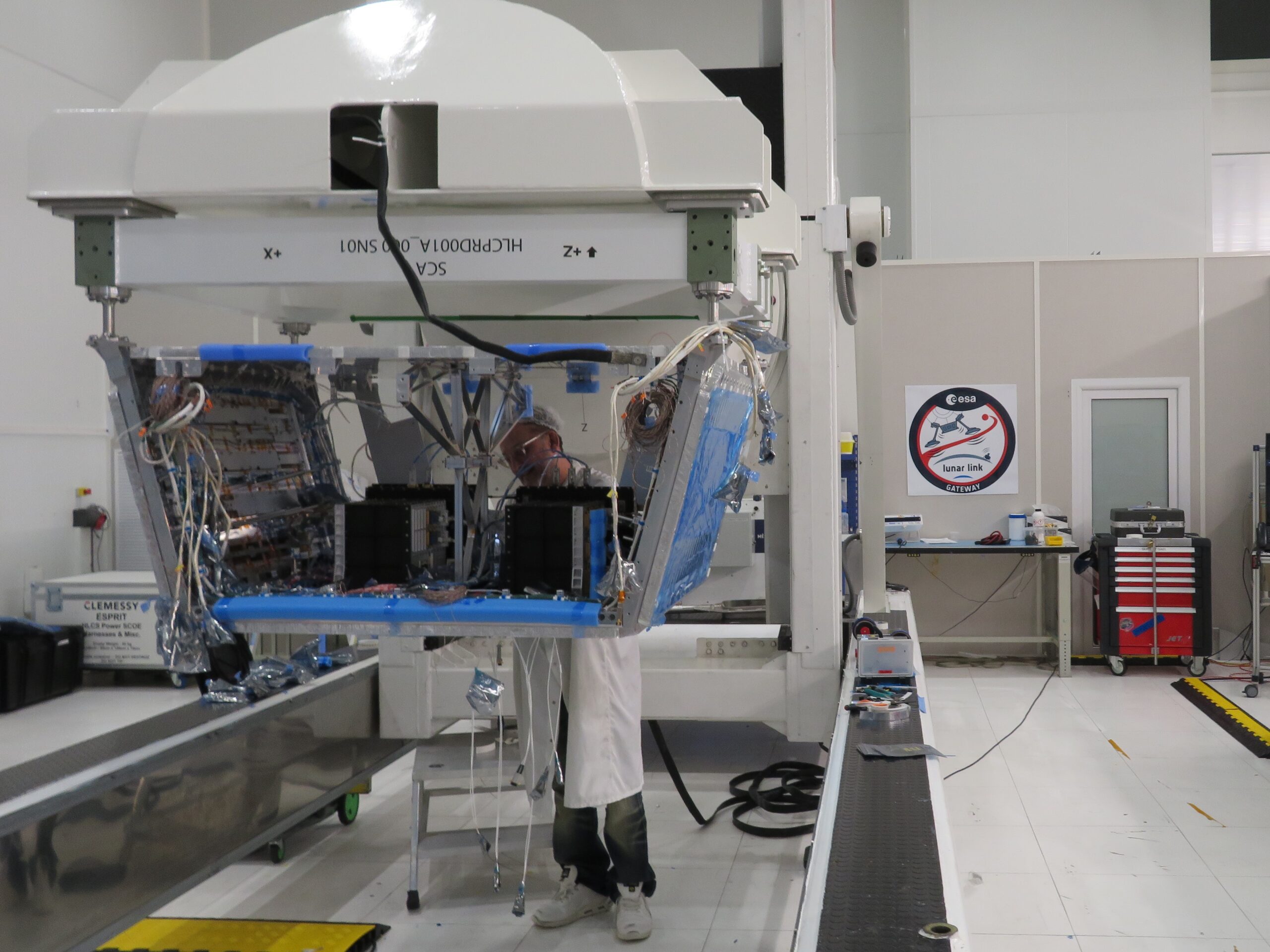
Lunar Link at Thales Alenia Space premises in Cannes, France. Teams started the assembly, integration and testing campaign in April 2025.
Credit: Thales Alenia Space
April
Back at LUNA, astronauts and engineers tested virtual reality technologies and lunar surface tools, refining how future crews will work on the Moon. These tests help ensure that equipment is intuitive, reliable and safe, even when wearing bulky spacesuits.

An operator equipped with a spacesuit, a tablet and a geological instrument for rock recognition performs a simulated moonwalk at Europe’s ‘Moon on Earth’ – the ESA-DLR LUNA facility.
Credit: DLR-M. Diegler
April also marked a key technical step for Lunar Link with its first power-on, while progress continued on the fourth European Service Module with the installation of its fuel tanks at Airbus in Bremen, Germany.
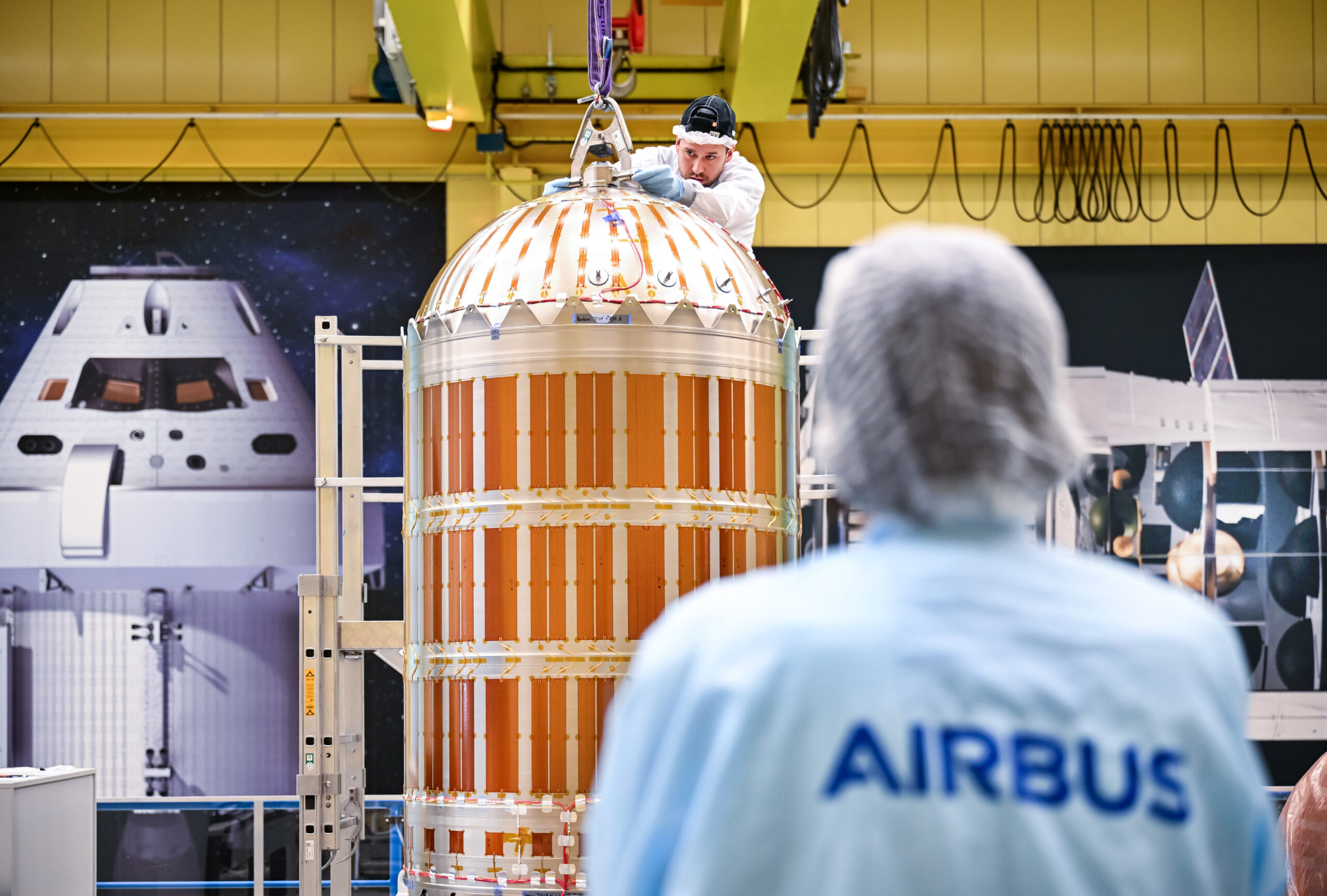
European engineers placing one of four 2000-litre tanks in ESA’s fourth European Service Module at prime contractor Airbus’ site in Bremen, Germany, in April 2025.
Credit: Airbus
May
In May, the Artemis II Orion spacecraft was declared complete and was then on the move at NASA’s Kennedy Space Center in Florida to be handed over to the Exploration Ground Systems team, who began the final phase of preparations for launch.
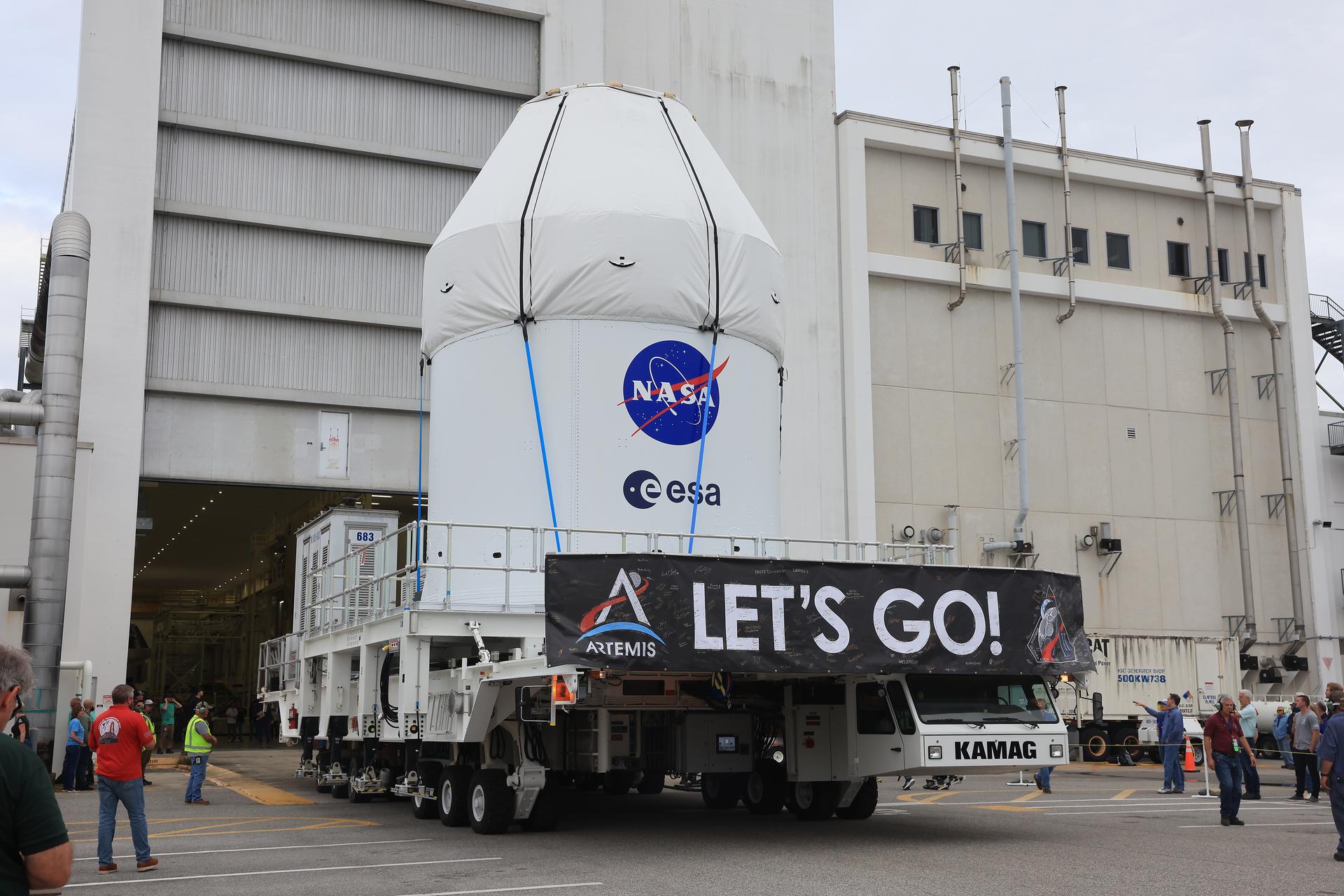
On 3 May, the fully assembled Orion spacecraft for Artemis II began its journey to the Multi-Payload Processing Facility at NASA’s Kennedy Space Center. The spacecraft is shown in transport, with its protective fairing panels clearly visible and proudly bearing the ESA and NASA logos.
Credit: NASA-K. Shiflett
At LUNA, our teams also explored how astronauts can best capture high-quality video of a Moon landing, turning grainy footage from the Apollo era into future HD moments of exploration to share with audiences back on Earth.
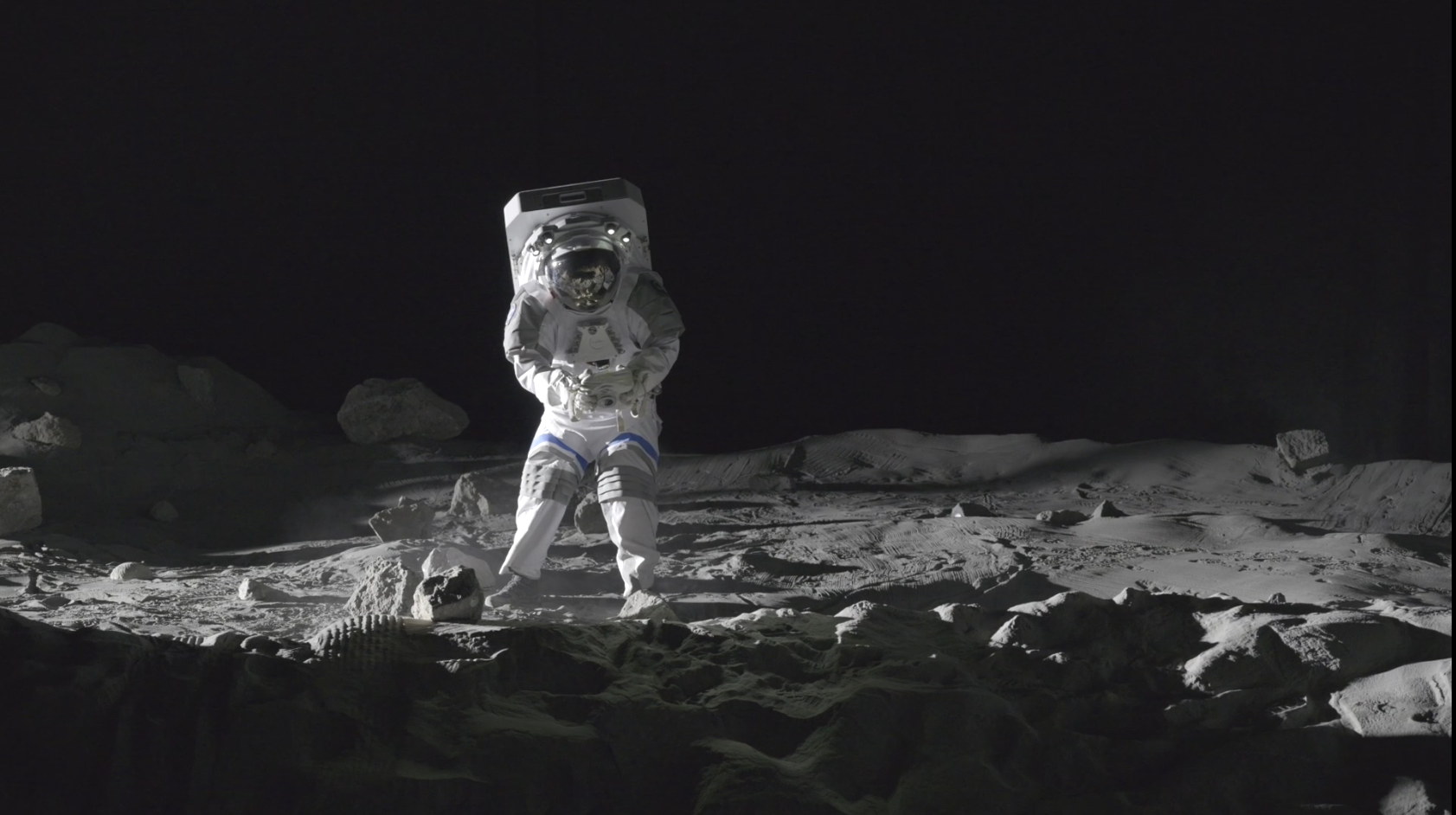
Reference shot of a simulated moonwalk at the LUNA facility in Germany.
Credit: NASA
July
On a lighter note, to celebrate Moon Day on 20 July, our engineering team leader for the European Service Module raced the very spacecraft he helped bring to life.
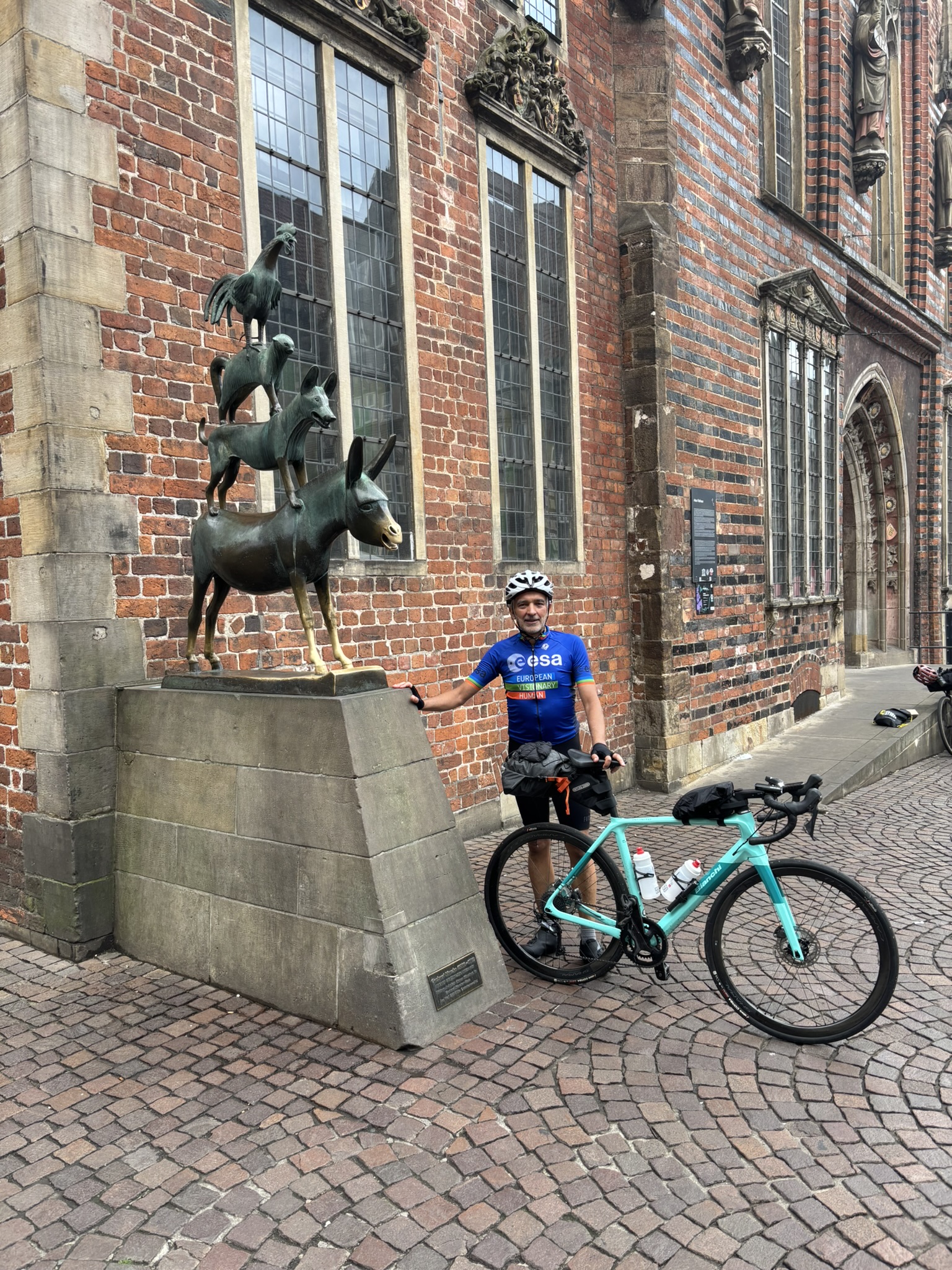
Antonio arrived safely in Bremen, beating ESM-1’s average speed by almost 3km/h! Credit: ESA-A. Preden
August
During the summer, ESA and NASA highlighted the close coordination of their combined mission control teams for Artemis. European experts from ESA and Airbus will join NASA and Lockheed Martin engineers in the Mission Evaluation Room at NASA’s Johnson Space Center in Houston, to monitor Orion throughout the mission.

The Orion Mission Evaluation Room team gathers for a group photo in the new evaluation room at NASA’s Johnson Space Center in Houston on Aug. 18, 2025.
NASA/Josh Valcarcel
Work also progressed on Lunar I-Hab, with engineers at Thales Alenia Space in Turin beginning to weld its primary structure.

The primary structure of ESA’s Lunar I-Hab habitation module for the lunar Gateway being built by European engineers at Thales Alenia Space in Turin, Italy.
Credit: Thales Alenia Space
September
September marked another major milestone as ESA officially handed over its third European Service Module to NASA, once again placing European hardware at the heart of human exploration beyond Earth orbit.

Teams from ESA, Airbus, NASA and Lockheed Martin stand before the service module for Artemis III at NASA’s Kennedy Space Center at the occasion of the official handover of ESM-3 from ESA to NASA.
Credit: NASA-A. Tankersley
Even crafting found its place in Artemis this month, with yours truly celebrating international crochet day by creating a crochet Orion spacecraft and touring it around ESA’s technical heart in the Netherlands, ESTEC.
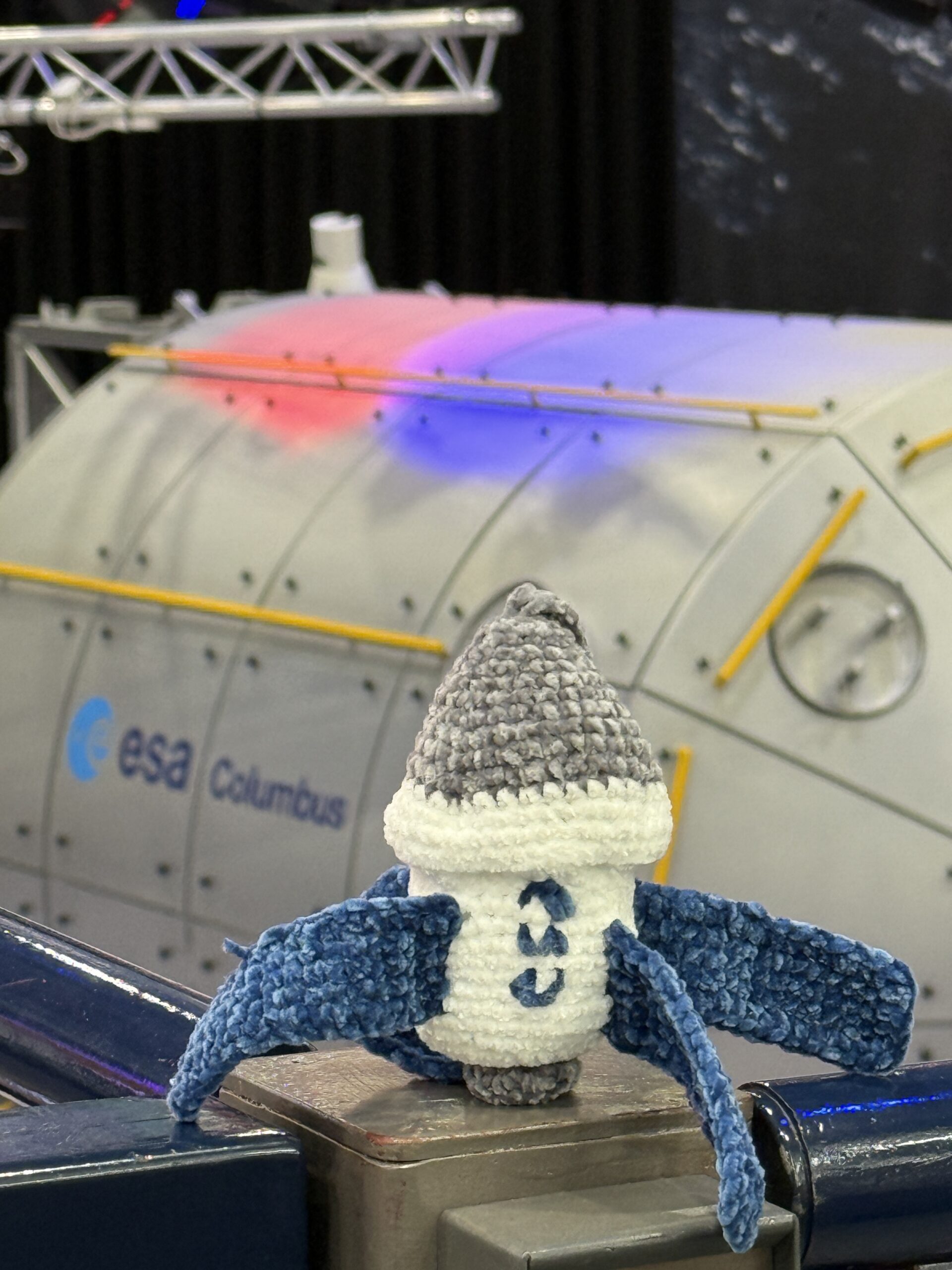
A handmade creation of Orion and its European Service Module in front of a 1:1 mock-up of the Columbus module at ESA’s ESTEC site in the Netherlands.
ESA-M. Deschamps
October
ESA astronauts completed helicopter training in October, learning how to manage vertical take-offs and landing in challenging environments – skills directly applicable to future lunar missions.

ESA astronauts Alexander Gerst, Matthias Maurer, Samantha Cristoforetti and Thomas Pesquet completed a helicopter training course with the German Bundeswehr, Germany’s federal defence forces.
Credit: Bundeswehr/J. Neumann
Meanwhile, Orion rolled out to NASA’s Vehicle Assembly Building at the Kennedy Space Center and was stacked onto the Space Launch System, a powerful visual sign that Artemis II was becoming reality.
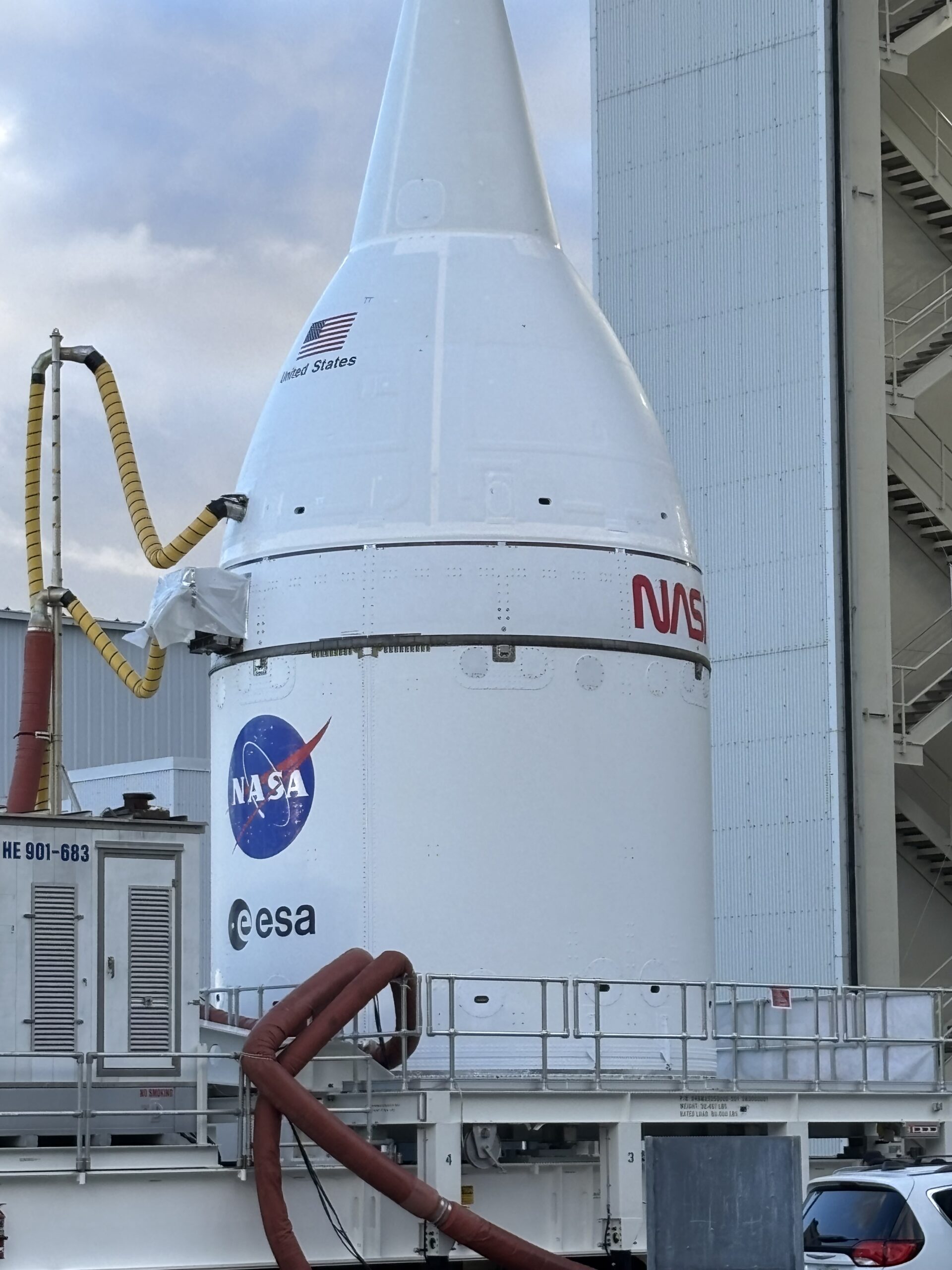
In October 2025, the Artemis II orion – complete with crew module, ESA’s European Service Module, solar arrays and launch abort system – was rolled 10 kilometres to the Vehicle Assembly Building at NASA’s Kennedy Space Center, for stacking onto the Space Launch System rocket.
Credit: ESA-M. Born
November
In November, our fourth European Service Module was completed at Airbus in Bremen and was packed up and ready to leave Europe on its transatlantic journey.
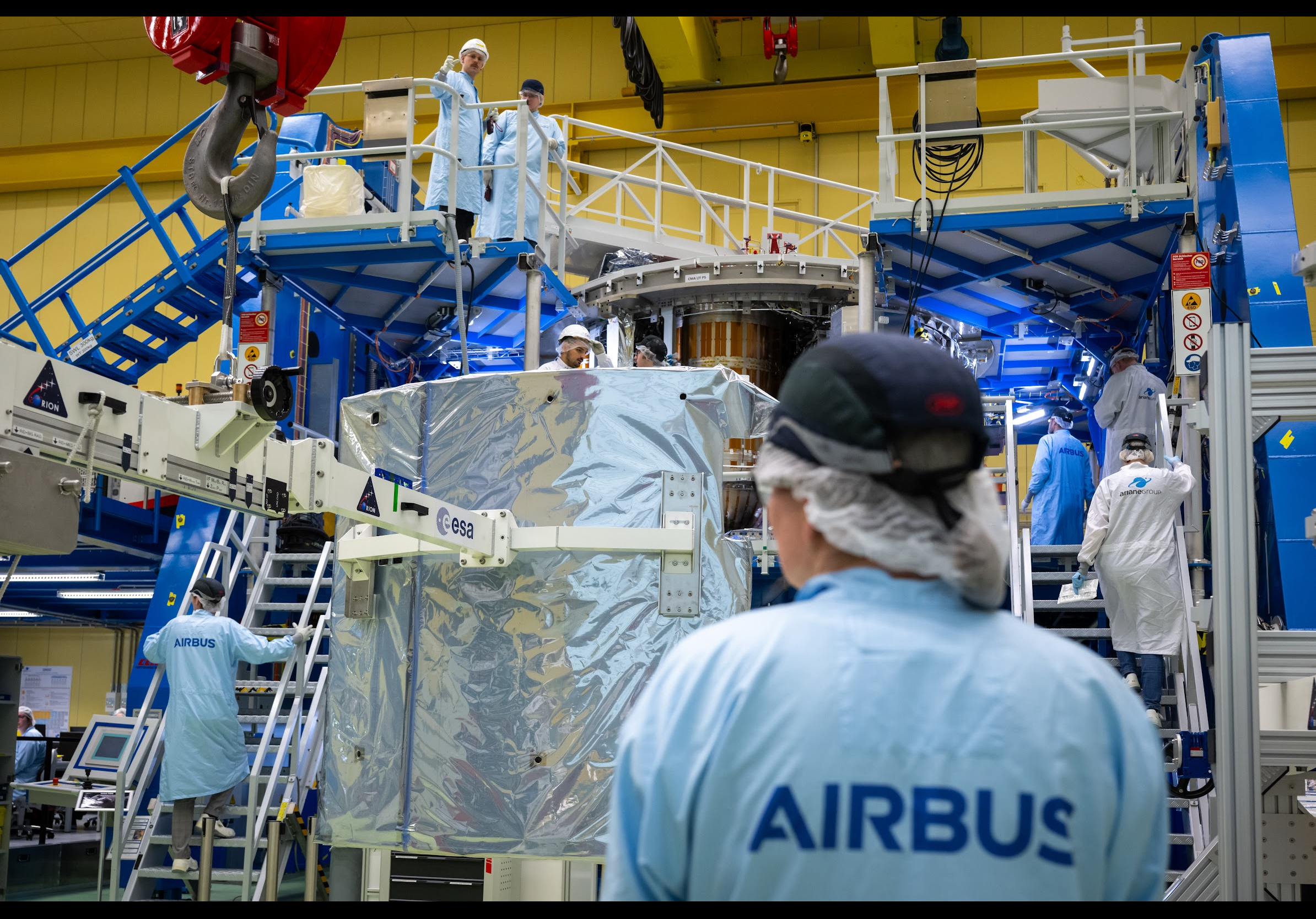
European engineers securing a shield panel around ESA’s fourth European Service Module at prime contractor Airbus’ site in Bremen, Germany, in early October 2025, before departure of the module to the United States.
Credit: Airbus
The Argonaut lunar lander family also grew, with prime contractor Thales Alenia Space Italy signing agreements with European partners to build the first Argonaut lander, a concrete step towards Europe’s independent and sustained presence on the Moon.

Argonaut’s lunar family.
Credit: ESA
Engineers also tested the deployment of Lunar Link’s antennas using a spectacularly large 1.25–metre–diameter balloon.
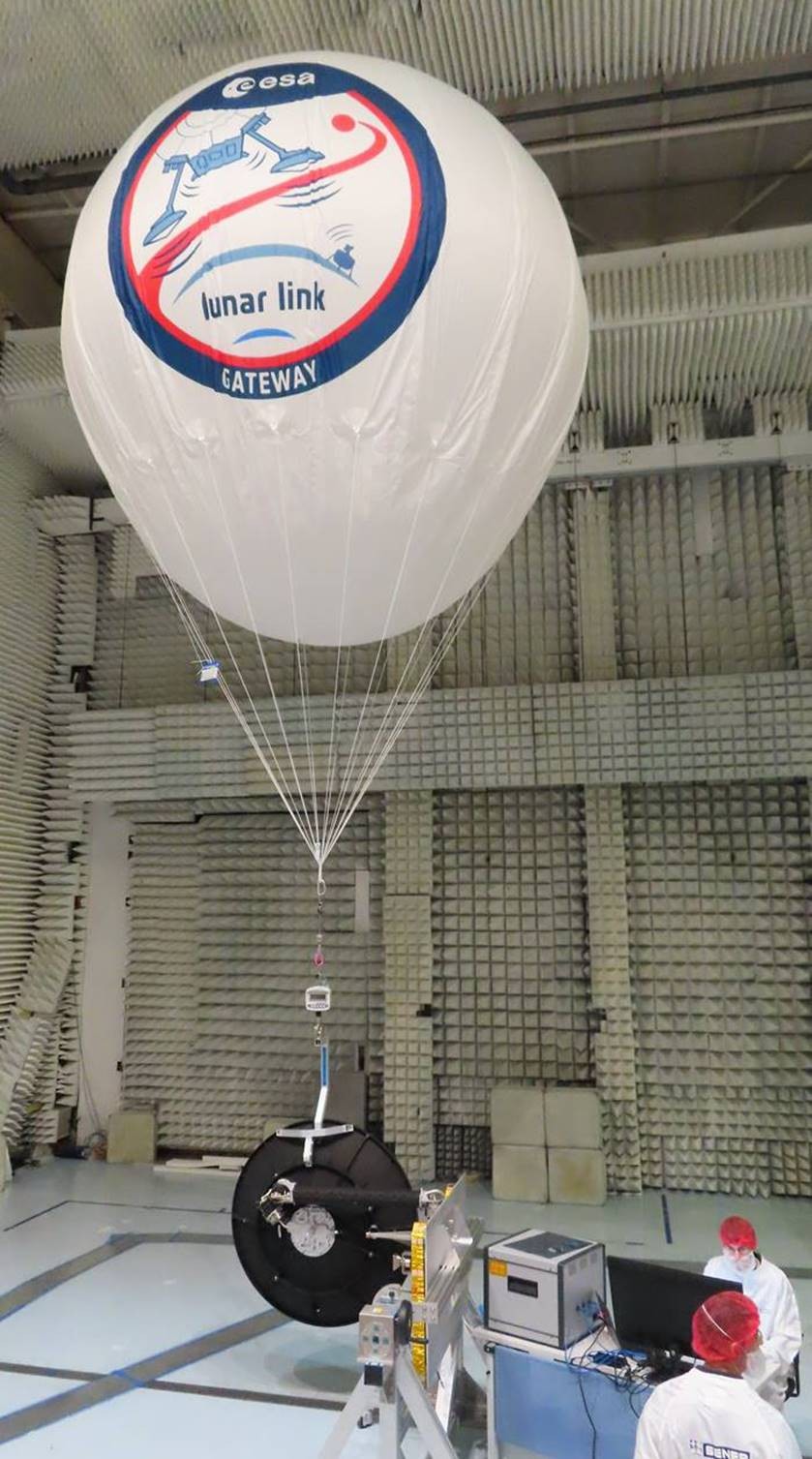
At the Thales Alenia Space cleanroom in Cannes, France, in November 2025 European engineers successfully tested the deployment of one of the antennas of Lunar Link, ESA’s telecommunications element for the lunar Gateway station.
Credit: Thales Alenia Space
December
The year ended with European Service Module-4 arriving safely at NASA’s Kennedy Space Center, ready to continue its journey towards space.
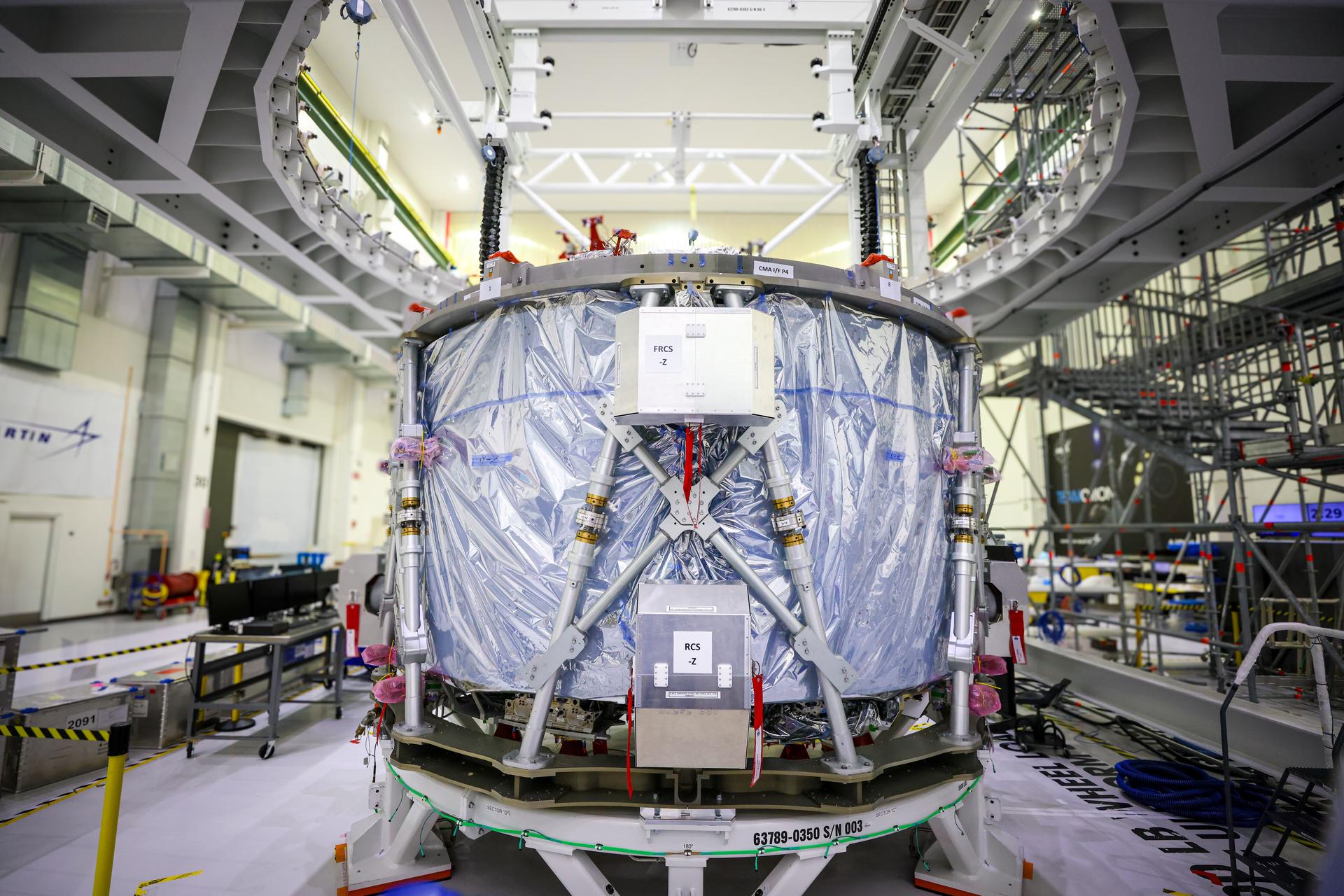
Our fourth European Service Module arrived at NASA’s Kennedy Space Center in Florida, United States, in late December 2025. This powerhouse will propel Orion and its crew safely towards the Moon and back during the Artemis IV mission, and provide them with breathable air, drinkable water, and a comfortable temperature throughout their lunar journey.
Credit: NASA-F. Michaux
From contracts signed in January to hardware delivered in December, 2025 showcased Europe’s steady and essential role in our journey towards the Moon.

 Automated Transfer Vehicle page
 ATV blog archive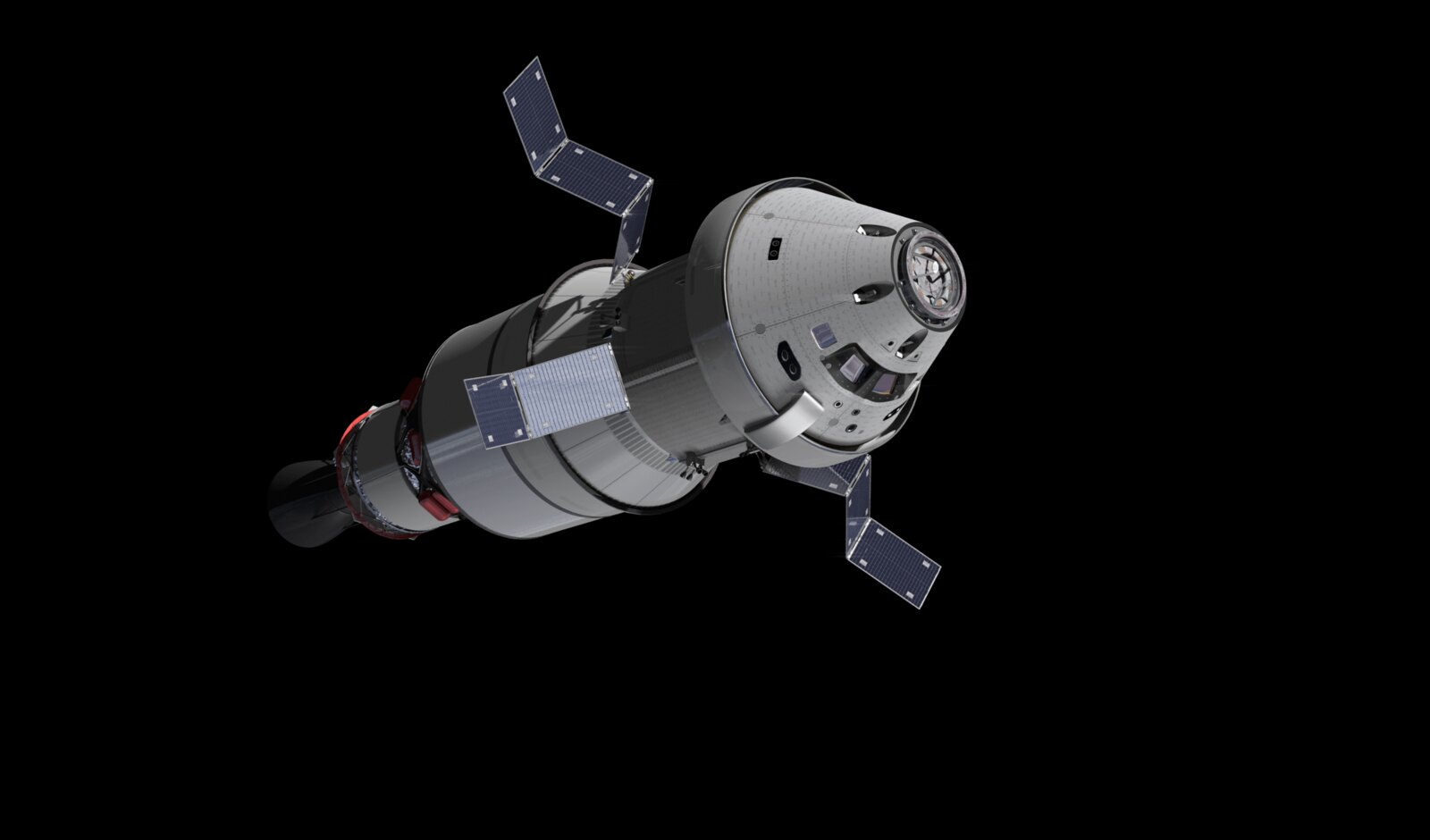
Discussion: no comments