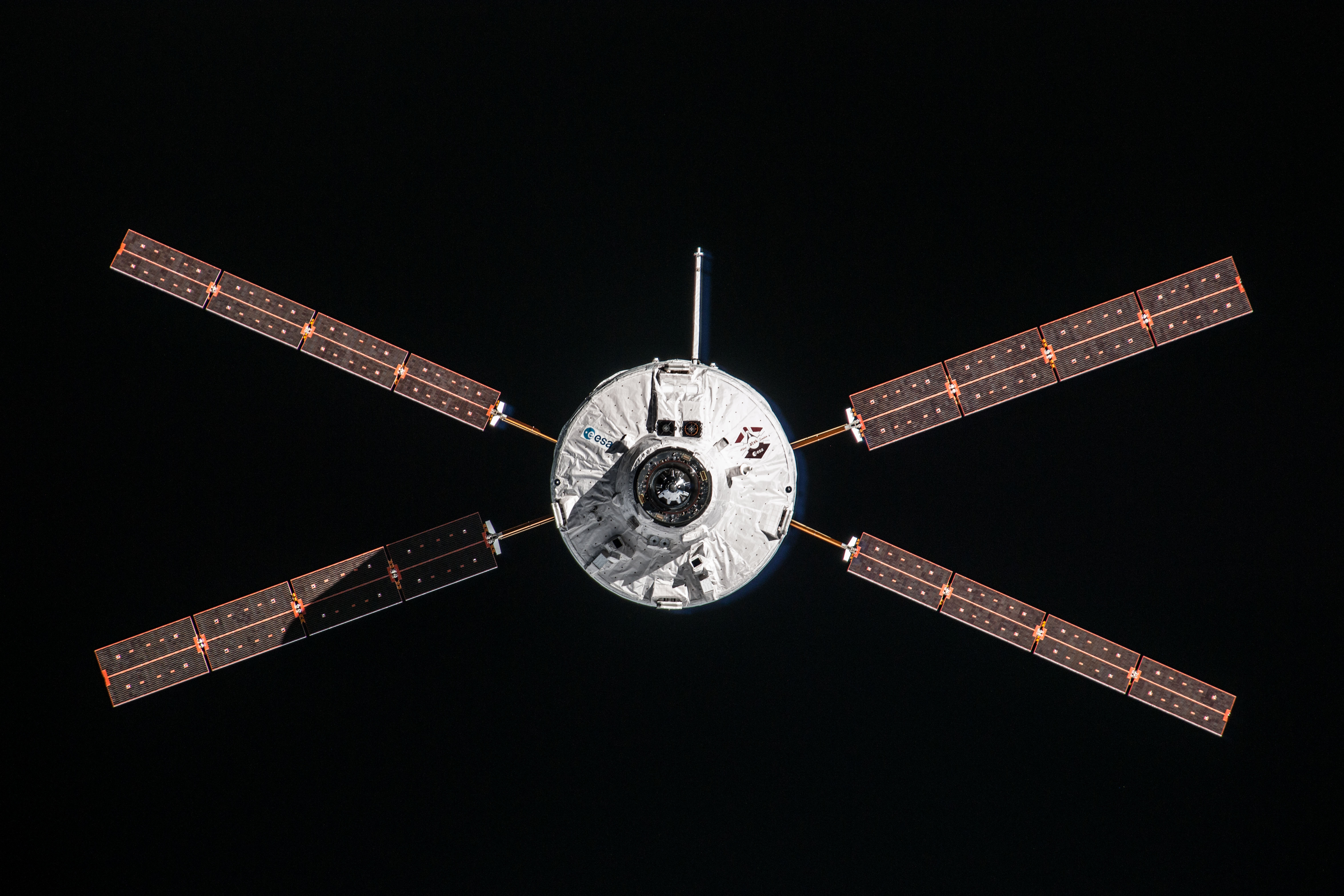
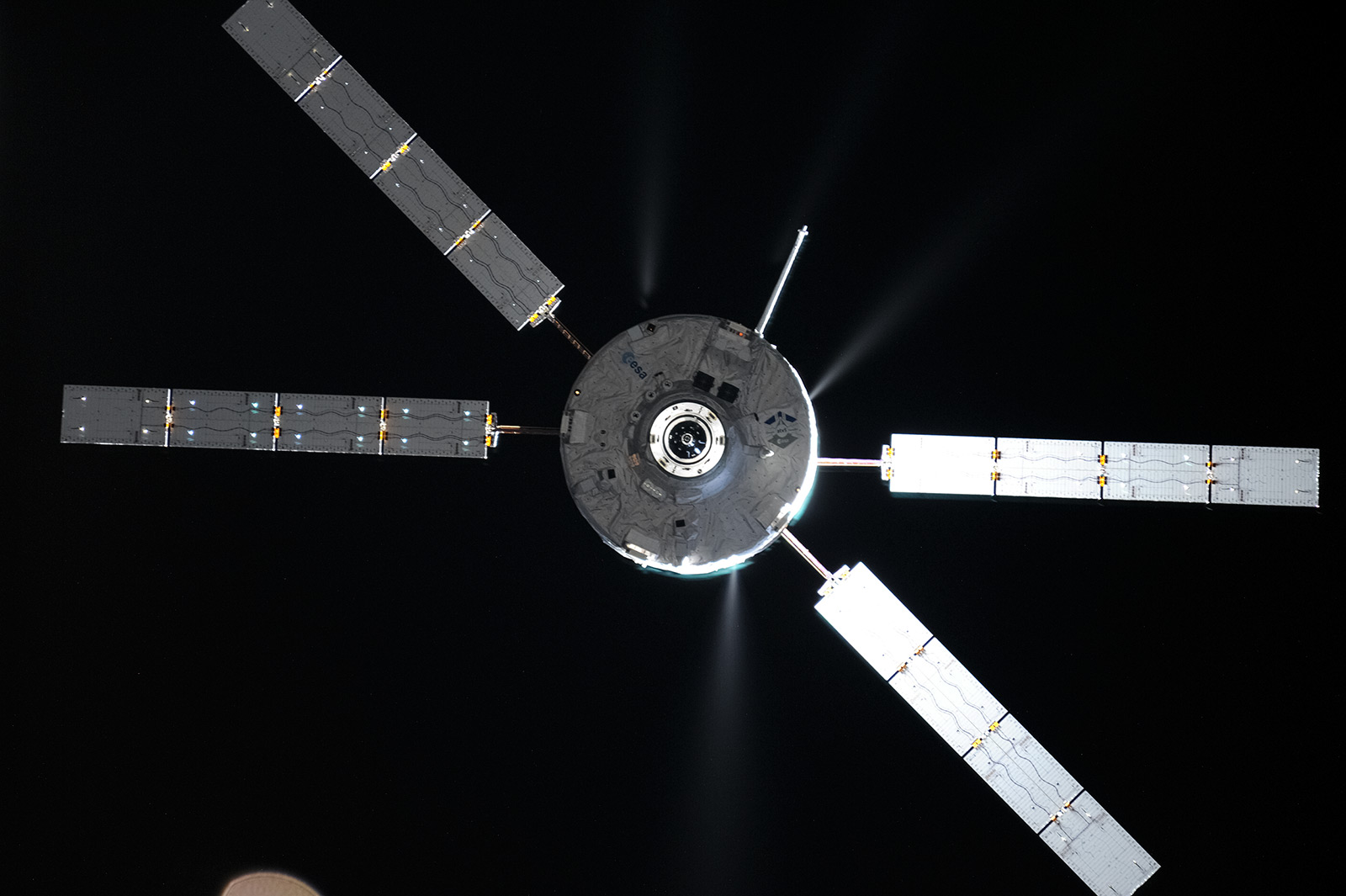
A few days ago, @Space_Pete sent in a query via Twitter asking about the Multi-Layer Insulation issue that occurred with ATV Jules Verne in 2008 and how this had been addressed for ATV Johannes Kepler. His question referred to a problem that occurred during the ATV-1 mission when, after launch, portions of the MLI - the brilliant, white thermal blanket that covers the ATV - came lose from several mooring points and, basically, just flapped free.
The absence of thermal protection over portions of the ATV's Integrated Cargo Carrier (the portion of ATV that carries the cargo) allowed heat to leak to space and caused some on-board heaters to work more than expected. Because the thermal and power situation remained acceptable, however, this was not considered a problem and the mission continued normally.
We passed the question over the ESA's Nico Dettmann, Head of the ATV Production Programme, who sent in this reply.
The Jules Verne Multi-Layer Insulation (MLI) partially detached from its fixation points because of a 'ballooning' or 'pillowing' effect of the MLI blankets. The depressurisation rate during lift off was underestimated. As a result, the air captured in the MLI compartments - basically, underneath the blanket - could not escape fast enough, leading the MLI to 'balloon' up. The MLI attachment points were not designed to withstand the resulting forces of the ballooning and partially detached.
Both the ballooning and the detachment were clearly visible in the photos taken from the ISS cameras when Jules Verne arrived at the station of docking.