Tag Archives: proximity link

Post-mating tests and fuelling up

Boom support

ATV Operations Interface Manager (and, whilst in Kourou, acting launch
campaign manager) Charlotte Beskow, continues to keep us up to date with the latest instalment of the mission diary – Ed.

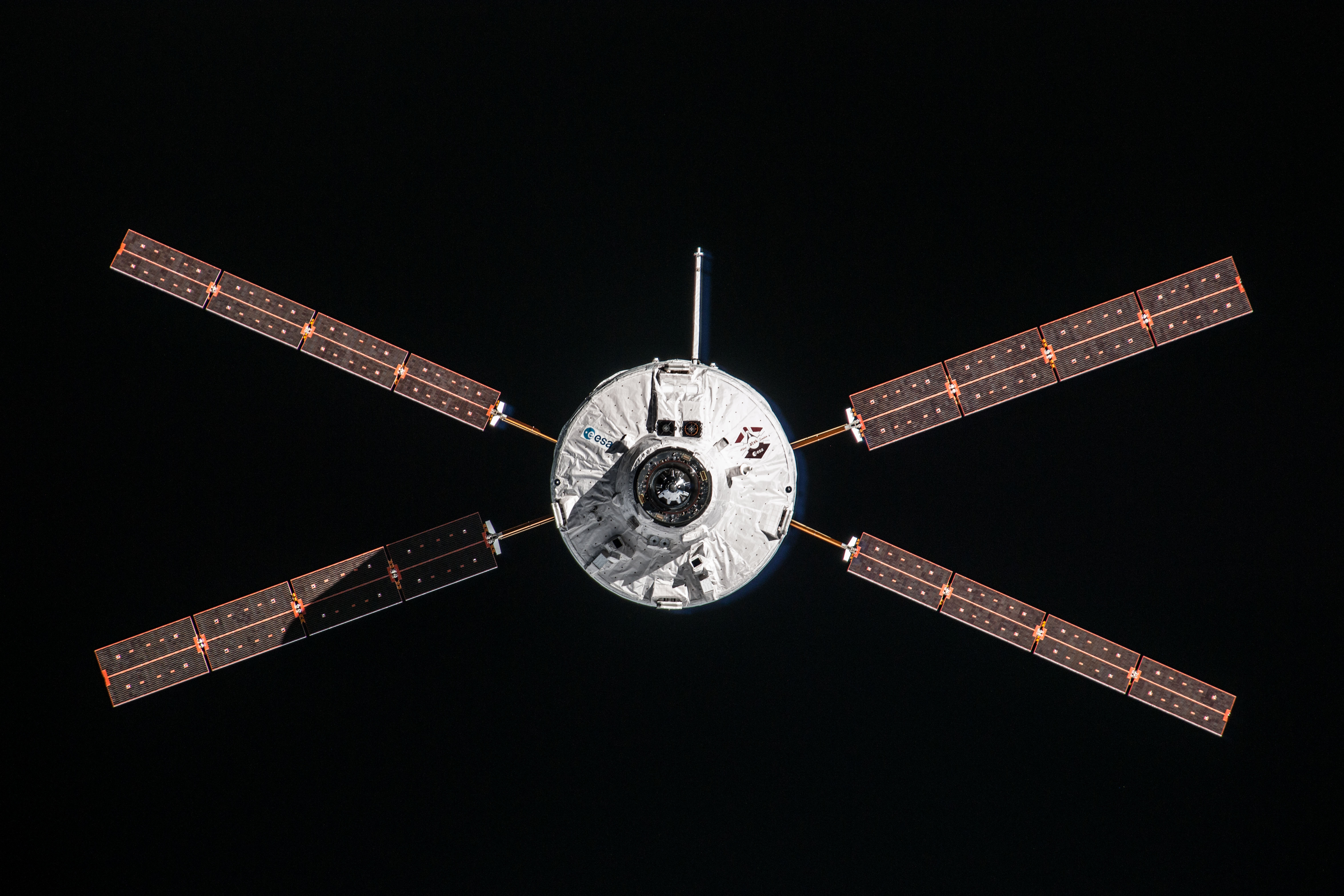
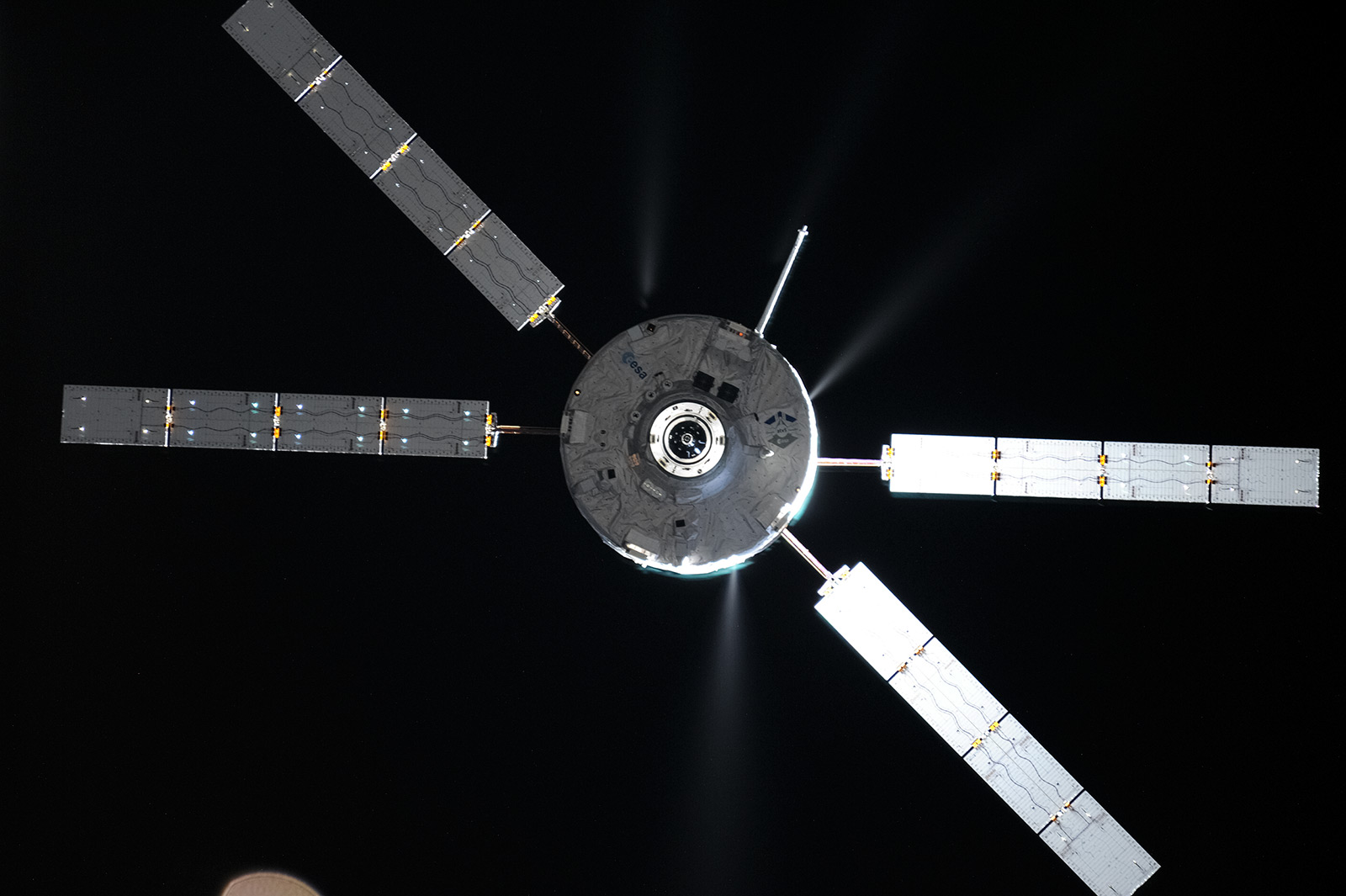
19 March 2013: One of the more visual tests is the deployment of the antenna boom. This boom carries the Prox link equipment, used for communicating directly with the International Space Station from a distance of 30 km (we send telemetry – TM – while the ISS sends GPS data and certain commands); the antenna boom is deployed in space, shortly after separation from Ariane.

Testing has to be done carefully to avoid damaging it! We might be rocket scientists but we prefer simple solutions, so we support the boom manually during the test. (more...)

Preparing for ATV-4 in space

Ground teams in Kourou, French Guiana, and ATV-CC, Toulouse, France, and several other locations are busy preparing for ATV-4's mission. Meanwhile in space...

From ESA's Columbus International Space Station status update:

ATV-4 Preparations
The Proximity Communications Equipment for Europe’s Automated Transfer Vehicle (ATV), used for close proximity communications between the ISS and the ATV, was installed inside the Russian Service Module, including installation of its proximity communications box, an antenna switching control box, control panel, hand controller as well as connecting up relevant cabling.

Subsequent connection testing was successful.

Editor's note: The image shows ESA astronaut André Kuipers training in 2011 to install the PCE communications equipment in the ISS.


ESA mission director: Excitement in the control room!

Editor's note: ESA mission Director Kris Capelle sent in this report earlier this evening to provide details on yesterday's successful proximity link telecommanding direct to ATV-3 in orbit via ESA's ESTRACK ground station network. The successful test of this important back-up communication link is proof of the versatility and expertise of ESA's ground station teams and technology, the ESA/CNES teams at ATV-CC and our marvellous ATV vessel.

ATV Mission Director Kris Capelle (blue shirt)

ATV Mission Director Kris Capelle (standing, blue shirt) during last year's ground test of the ATV back-up link. Now it works in orbit, too.

The proximity link test last night with our ESTRACK ground stations was a big success.

For the first time, we received telemetry and sent commands from several of our ESA ground stations (Maspalomas, Villafranca and Redu) to/from ATV in orbit.

With this test, we demonstrated that we have an additional operational possibility for communication with ATV in case of emergency or loss of the prime telecommanding channels.

It was not easy, though, to perform this test. Yes, the teams were very excited, but we had to be very concentrated to perform the job successfully.

ATV Ground Segment

ATV Ground Segment

First off, making this link ready to work was the result of a long project first begun after ATV-1, in which the ATV's on-board software had to be updated and then validated.

Then, our control centre here in Toulouse had to be configured to communicate with ESA's ESTRACK stations. In addition, dedicated equipment had to be installed in the stations and these units had to be configured and controlled from ESOC, the European Space Operations Centre, in Darmstadt, Germany.

(more...)

ATV-CC sends commands to orbiting ATV-3 via ESTRACK stations

For the first time, mission controllers at ATV-CC in Toulouse successfully communicated yesterday with ATV in orbit via the 'Back-up Proximity Link'. The link uses ESA's ESTRACK station network to send telecommands and receive telemetry directly to/from the vessel via ATV's proximity link radio system. (The prox link is normally used for ATV-to-ISS telecommunication during docking; but it's more than capable of talking direct to ESTRACK stations on Earth).

ESA's 15m ESTRACK antenna at Redu, Belgium. Credit: ESA

ESA's 15m ESTRACK antenna at Redu, Belgium. Credit: ESA

ESA's 15m ESTRACK antenna at ESAC, Spain. Credit: ESA

ESA's 15m ESTRACK antenna at ESAC, Spain. Credit: ESA

ESA's 15m ESTRACK antenna at Maspalomas, Spain. Credit: ESA

ESA's 15m ESTRACK antenna at Maspalomas, Spain. Credit: ESA

ESA's 15m stations at Maspalomas and Villafranca, Spain, and Redu, Belgium, were used in yesterday's test, which confirmed the availability of an additional operational communication link with ATV-3. The stations are controlled from ESOC, the European Space Operations Centre in Darmstadt, Germany.

And the ESTRACK stations performed flawlessly!

For more background on the back-up proximity link system and how it was developed, read our earlier posts below; these describe (a) the successful first-ever test of the system, when ATV-2 was mounted on top of Ariane 5 at Kourou last year and successfully communicated with ATV-CC via the ESTRACK station in Kourou, and (b) successful test of communication between ESTRACK stations and the prox link radio mounted on the ISS.

More details on ESA's ESTRACK station network via ESA web.


And -- just because ESTRACK stations are gorgeous -- here are the webcam views of ESA's 35m stations in Cebreros, Spain, and Malargue, Argentina:


Update from ATV-CC: ATV is on its (back) way to the ISS

[updated 26.03] ATV Edoardo Amaldi is performing extremely well!

As of mid-day yesterday, Saturday, the first two phasing manoeuvres (burns) had been completed, and, as of 19:09 CET, Amaldi was orbiting between 275 and 295km altitude. Additional phasing burns were conducted today; with each burn, ATV gets higher and closer to the ISS orbit. Average temperature inside the ATV cargo carrier? A comfy 21.5C. Overall status? Everything is nominal.

ATV-3 LEOP and approach to the ISS -- animation showing solar arrays unfolding and rotating, proximity (ATV-to-ISS) antenna boom deployment and GPS signal acquisition.

One minor issue was seen during the Launch and Early Orbit Phase (LEOP) -- it was noted that the ATV's Proximity Link Antenna Boom (the Antenna Deployable Boom or ADB) had correctly deployed, but the final sensor confirmation that the boom was locked into place was not received.

The antenna is used for direct communication and data synchronisation between the ATV and Station during rendezvous (more details on the Proximity Link System here).

(more...)

André Kuipers training to install ATV radio unit in ISS

There's a great photo posted earlier today showing ESA astronaut André Kuipers training in Russia for his upcoming PromISSe mission - he was in the mock-up of the Zvezda module of the ISS.

Via Twitter @astro_andre wrote (via Yfrog): "ISS training on installing equipment for communicating with ESA's ATV cargo ship. 40 cables. Imagine floating..."

Prior to the docking of each ATV, the crew -- in this case, Astro André -- must install and configure the proximity link radio (PCE) inside the Zvezda module. It communicates by radio via two antennas mounted on the outside of the ISS with the two similar antennas mounted on ATV, one directly on the side of the vessel and another on a deployable boom. The 55-kg PCE unit mounted inside the Zvezda module arrived in space via a Progress resupply mission in March 2005.

The PCE is part of the direct radio link between the ISS and ATV and is required for the final phase of the rendezvous and docking. It is through this interface that the ISS crew can quickly react to unexpected deviations from the nominal rendezvous and docking approach by issuing a radio command to ATV – to hold, perform an escape or abort the docking.

More details on how the proximity radio link is also used as a backup telecommand link for ATV via "ESA ground stations communicate with ISS"

ESA ground stations communicate with ISS

We received a note on Monday, 31 January, from ESA's Daniel Firre from the ATV Operations Management Team who was here at ESOC in Germany working with the ESTRACK ground station experts to conduct a pre-launch test of the ATV proximity communication system. The system provides a direct radio link between ATV and the Russian Zvezda service module of the ISS.

Monday's test included transmitting a signal from the ISS in space to ESA's 15m stations located at Maspalomas and Villafranca, Spain, a space-to-ground distance of some 350 km.

Compare this to a separate test last week with the ATV, which involved using the proximity communication transmitter on board ATV to transmit a live radio signal over the air from ATV mounted on top of Ariane 5 (in Kourou) to ESA's 15m ground station that is also in Kourou - a distance of just a few kilometres! See: 'Telemetry received from ATV via ESA tracking station'

Now, both proximity radio units - one on board the ISS and one on board ATV - have successfully contacted ESA tracking stations. And both the primary and back-up modes have been confirmed. As Daniel wrote: "The success of today's test lit another green light for launch on 15 February."

Access full details after the jump.
(more...)

Telemetry received from ATV via ESA tracking station

For the first time this evening, live telemetry - data signals - were received from ATV via the newly developed back-up proximity link system (see our earlier post announcing the test).

ATV Mission Director Kris Capelle (blue shirt) monitors the test with Flight Director Cedric Delmas (seated)

ATV Mission Director Kris Capelle (blue shirt) monitors the test with Flight Director Cedric Delmas (seated)

The signals were transmitted from ATV-2, which is mounted on top of Ariane 5 in the assembly building near the launch pad in Kourou, over the air to ESA's 15m Kourou tracking station using the vessel's proximity link radio. Kourou station ('Diane station') is part of the Agency's ESTRACK network and, as the name implies, is also located at Kourou - just a few kilometres line-of-sight from ATV.

Screenshot showing first receipt of telemetry from ATV

Screenshot showing first receipt of telemetry from ATV

The signals were then sent from Kourou station to the ESTRACK Control Centre at the European Space Operations Centre in Darmstadt, Germany, and from there relayed over to ATV-CC in Toulouse.

ESA's Fabio Sintoni, lead engineer working on the back-up proximity link system, just sent in these photos (thanks, Fabio!).

The successful test ensures that ATV's proximity link can be used as a (third) back-up communication channel, with ATV transmitting directly from space to ESA tracking stations on Earth. ATV normally communicates via NASA's TDRSS data relay satellite system or via ESA's own Artemis data relay satellite.

The video shot by ESA's Human Spaceflight editor Jari Makinen is now live in YouTube - and below (thanks, Jari!).

Live test of ATV’s space-to-ground link today

ESA's 15m tracking station at Kourou

ESA's 15m tracking station at Kourou during the launch of Herschel & Planck in May 2009

Just spoke with ATV ground segment engineer Fabio Sintoni: today, teams at ATV-CC and Kourou will conduct the first live test of the vessel's space-to-ground radio link.

He says the test is interesting as it involves rotating and pointing the 15m dish antenna of ESA's Kourou tracking station at the vertical assembly building (BAF) at Kourou, which currently houses ATV on top of Ariane 5. The antenna and BAF are separated by just a few kilometres (as you can see in this image from the 2009 launch of Herschel/Planck), so engineers will be able to conduct a real, 'over-the-air' test of the radio link between the two.

Once in orbit, the link is used as a backup and enables ATV to communicate directly to ESA ground stations located at Maspalomas and Villafrance, Spain, and Redu, Belgium. Today's test gets underway at 16:00 CET.

More info on Kourou station via ESA's ESTRACK pages