Category Archives: Communications

Preparing for ATV-4 in space

Ground teams in Kourou, French Guiana, and ATV-CC, Toulouse, France, and several other locations are busy preparing for ATV-4's mission. Meanwhile in space...

From ESA's Columbus International Space Station status update:

ATV-4 Preparations
The Proximity Communications Equipment for Europe’s Automated Transfer Vehicle (ATV), used for close proximity communications between the ISS and the ATV, was installed inside the Russian Service Module, including installation of its proximity communications box, an antenna switching control box, control panel, hand controller as well as connecting up relevant cabling.

Subsequent connection testing was successful.

Editor's note: The image shows ESA astronaut André Kuipers training in 2011 to install the PCE communications equipment in the ISS.


NASA launches next-gen communications satellite

TDRS-K lift off from Cape Canaveral Air Force Station, 31 January 2013 Credit: NASA

TDRS-K lift off from Cape Canaveral Air Force Station, 31 January 2013 Credit: NASA

Editor's note: NASA's Tracking & Data Relay Satellite network provides the main  communications link between ATV Control Centre in Toulouse, France, and the ATV vessels in orbit. This launch will directly assist ESA and CNES mission controllers to remain in contact with ATV-4.

The first of NASA's three next-generation Tracking and Data Relay Satellites (TDRS), known as TDRS-K, launched at 02:48 CET Thursday, 31 January, from Cape Canaveral Air Force Station in Florida.

"TDRS-K bolsters our network of satellites that provides essential communications to support space exploration," said Badri Younes, deputy associate administrator for Space Communications and Navigation at NASA Headquarters in Washington. "It will improve the overall health and longevity of our system."

The TDRS system provides tracking, telemetry, command and high-bandwidth data return services for numerous science and human exploration missions orbiting Earth. These include the International Space Station and NASA's Hubble Space Telescope.

Via NASA

... and a great pic!

Tracking and Data Relay Satellite-K, streaks past the Vehicle Assembly Building and Launch Complex 39 at Kennedy Space Center after launching from Space Launch Complex 41 at 8:48 p.m. EST. Credit: NASA

Tracking and Data Relay Satellite-K, streaks past the Vehicle Assembly Building and Launch Complex 39 at Kennedy Space Center after launching from Space Launch Complex 41 at 8:48 p.m. EST. Credit: NASA

So long… and thanks for all the oxygen

The ESA web portal published an article announcing the ATV-3 undocking and highlighting its mission success so far:

ESA’s ATV Edoardo Amaldi’s time is near. Next week the spacecraft will undock from the International Space Station and burn up in Earth’s atmosphere, its hugely successful mission coming to an end six months after launch.

ATV Edoardo Amaldi will undock during the night of 25/26 September, and, just 24 hours later, will be commanded to perform a controlled destructive re-entry high over an uninhabited area of the South Pacific.

 Read more on ESA portal...


ATV-4 passes critical live-connection test

Docking simulation training at ATV-CC 26 January 2012. Credit: ESA/J. Harrod

Docking simulation training at ATV-CC 26 January 2012. Credit: ESA/J. Harrod

I spoke on 30 July with ESA's Marcus De Deus Silva, who works on the joint ESA/CNES ATV mission operations team at Toulouse. Marcus was responsible for planning and overseeing last week's System Validation Test (SVT) for ATV-4, the first one.

For any mission, SVT's are crucial! This type of test involves connecting the actual spacecraft (or its engineering model twin) to the actual mission control system developed at the control centre. Engineers can then send 'real' telecommands to the spacecraft, checking that it reacts as it should and that all flight procedures, processes and systems work as planned.

ESA's Artemis data relay satellite Credit: ESA

ESA's Artemis data relay satellite Credit: ESA

For ATV in particular, this means that the mission control team at ATV-CC in Toulouse were actually connected to ATV-4 mounted on a test bed at the Astrium manufacturing facility in Bremen, Germany. The team sent telecommands, tested communications to/from ATV, checked on-board internal communication of data between systems, confirmed that several safety systems were working and sent a test 'CAM' command (Collision Avoidance Manoeuvre).

The test ran for an exhausting, 06:00-21:00 day, and took months of team work to prepare, but the work paid off: "There were no unforeseen issues, and the test went very well," says Marcus.

The test involved representatives from the joint ESA/CNES mission control team, Astrium, Redu station, ESA's Columbus Control Centre, NASA Houston and NASA TDRSS.

There were several interesting aspects to this SVT.

"The connection was made via NASA's Tracking and Data Relay Satellite System (TDRSS) as well as via ESA's Artemis relay satellite," says Marcus.

NASA TDRS satellite Credit: NASA

NASA TDRS satellite Credit: NASA

"So the communication chain ran from ATV-CC via the International ISS Ground Segment connections to NASA mission control Houston (MCC-H), then to the White Sands antenna farm, up to a NASA TDRSS satellite, down to a ground receiver set up at Astrium Bremen and then into ATV-4 via a cable connection." Later in the test, communications were also run via Artemis via ESA's Redu station in Belgium.

He says it was necessary to run the SVT sending test commands to ATV-4 between periods of sending normal, routine telecommands to ATV-3 in orbit - via a different TDRSS satellite. "It was vitally important to keep the two mission control systems separate, for obvious reasons, so we put a lot of effort into this," says Marcus.

In fact, test commands to ATV-4 were sent only when the ISS (with ATV-3 docked) was on the opposite side of Earth, so there was a nice physical barrier - our planet - between the two ATVs.

A second SVT for ATV-4 is planned for later on, about ten weeks before launch and prior to ATV-4 fuelling in Kourou.

ATV spotted at NASA’s ISS Mission Control Centre

Good catch & grab from NASA TV by Twitter user @StarlingLX! She is also attending the AndreTweetup on 29 March at ESA/ESTEC. Thanks, Alex, for a great photo! NASA Flight Directors Katja Leuoth and Cise (@CarbonFlight) are seen in the photo.

@esaoperations Thought the same thing. Cool! Took a screenshot the other day with @Carbon_Flight on console. #ATV3 twitter.com/starlingLX/sta…

-- Alex von Eckartsberg (@starlingLX) 16 May 2012

ATV seen 'on console' at NASA MCC-H Credit: NASA TV/@starlingLX

ATV seen 'on console' at NASA MCC-H Credit: NASA TV/@starlingLX

ESA mission director: Excitement in the control room!

Editor's note: ESA mission Director Kris Capelle sent in this report earlier this evening to provide details on yesterday's successful proximity link telecommanding direct to ATV-3 in orbit via ESA's ESTRACK ground station network. The successful test of this important back-up communication link is proof of the versatility and expertise of ESA's ground station teams and technology, the ESA/CNES teams at ATV-CC and our marvellous ATV vessel.

ATV Mission Director Kris Capelle (blue shirt)

ATV Mission Director Kris Capelle (standing, blue shirt) during last year's ground test of the ATV back-up link. Now it works in orbit, too.

The proximity link test last night with our ESTRACK ground stations was a big success.

For the first time, we received telemetry and sent commands from several of our ESA ground stations (Maspalomas, Villafranca and Redu) to/from ATV in orbit.

With this test, we demonstrated that we have an additional operational possibility for communication with ATV in case of emergency or loss of the prime telecommanding channels.

It was not easy, though, to perform this test. Yes, the teams were very excited, but we had to be very concentrated to perform the job successfully.

ATV Ground Segment

ATV Ground Segment

First off, making this link ready to work was the result of a long project first begun after ATV-1, in which the ATV's on-board software had to be updated and then validated.

Then, our control centre here in Toulouse had to be configured to communicate with ESA's ESTRACK stations. In addition, dedicated equipment had to be installed in the stations and these units had to be configured and controlled from ESOC, the European Space Operations Centre, in Darmstadt, Germany.

(more...)

ATV-CC sends commands to orbiting ATV-3 via ESTRACK stations

For the first time, mission controllers at ATV-CC in Toulouse successfully communicated yesterday with ATV in orbit via the 'Back-up Proximity Link'. The link uses ESA's ESTRACK station network to send telecommands and receive telemetry directly to/from the vessel via ATV's proximity link radio system. (The prox link is normally used for ATV-to-ISS telecommunication during docking; but it's more than capable of talking direct to ESTRACK stations on Earth).

ESA's 15m ESTRACK antenna at Redu, Belgium. Credit: ESA

ESA's 15m ESTRACK antenna at Redu, Belgium. Credit: ESA

ESA's 15m ESTRACK antenna at ESAC, Spain. Credit: ESA

ESA's 15m ESTRACK antenna at ESAC, Spain. Credit: ESA

ESA's 15m ESTRACK antenna at Maspalomas, Spain. Credit: ESA

ESA's 15m ESTRACK antenna at Maspalomas, Spain. Credit: ESA

ESA's 15m stations at Maspalomas and Villafranca, Spain, and Redu, Belgium, were used in yesterday's test, which confirmed the availability of an additional operational communication link with ATV-3. The stations are controlled from ESOC, the European Space Operations Centre in Darmstadt, Germany.

And the ESTRACK stations performed flawlessly!

For more background on the back-up proximity link system and how it was developed, read our earlier posts below; these describe (a) the successful first-ever test of the system, when ATV-2 was mounted on top of Ariane 5 at Kourou last year and successfully communicated with ATV-CC via the ESTRACK station in Kourou, and (b) successful test of communication between ESTRACK stations and the prox link radio mounted on the ISS.

More details on ESA's ESTRACK station network via ESA web.


And -- just because ESTRACK stations are gorgeous -- here are the webcam views of ESA's 35m stations in Cebreros, Spain, and Malargue, Argentina:


Artemis: the ATV whisperer

ESA's Artemis communications satellite is in action again to ensure the safe arrival of Europe’s third Automated Transfer Vehicle at the International Space Station with vital supplies.

Read full article via ESA web

Update from ATV-CC: ATV is on its (back) way to the ISS

[updated 26.03] ATV Edoardo Amaldi is performing extremely well!

As of mid-day yesterday, Saturday, the first two phasing manoeuvres (burns) had been completed, and, as of 19:09 CET, Amaldi was orbiting between 275 and 295km altitude. Additional phasing burns were conducted today; with each burn, ATV gets higher and closer to the ISS orbit. Average temperature inside the ATV cargo carrier? A comfy 21.5C. Overall status? Everything is nominal.

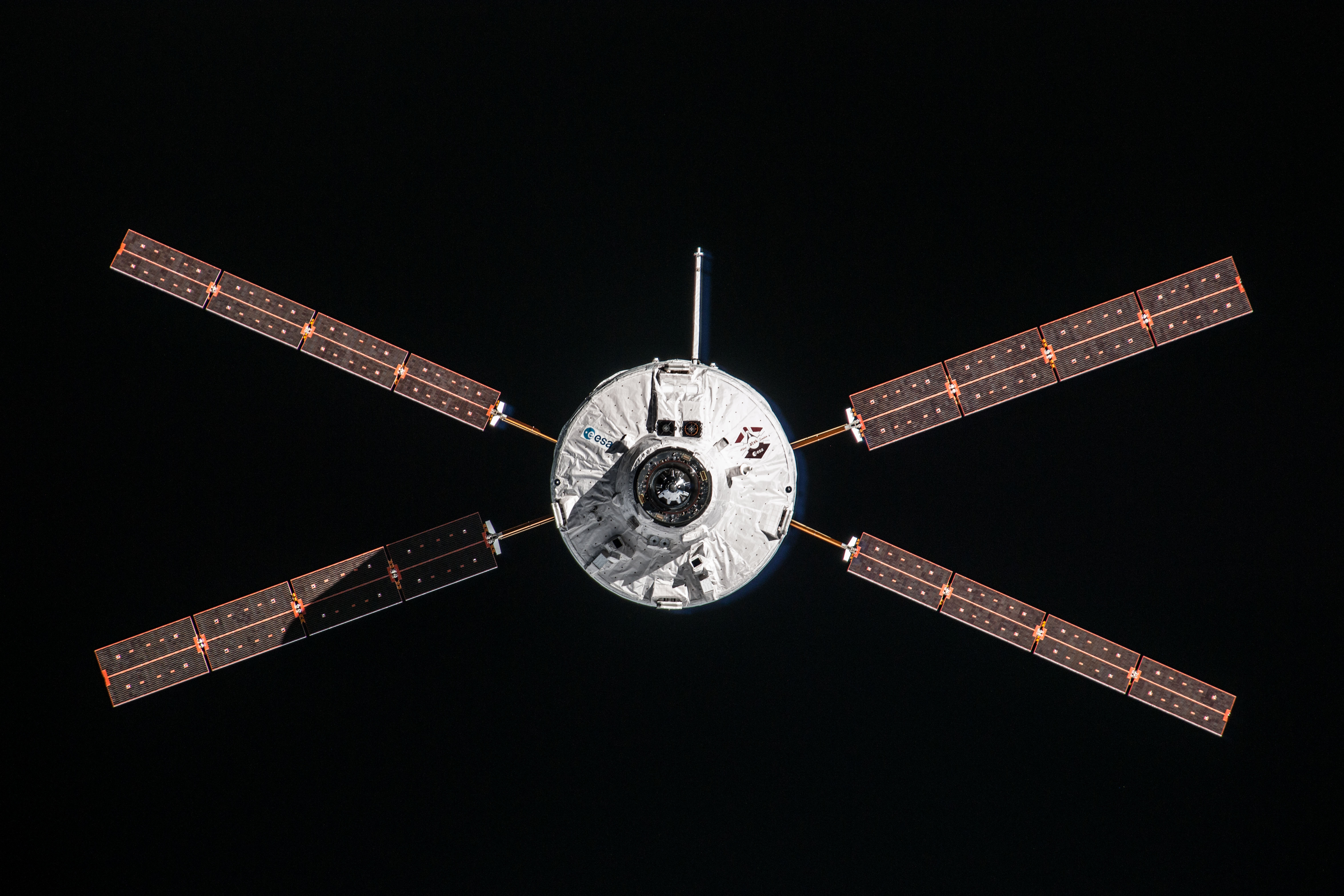
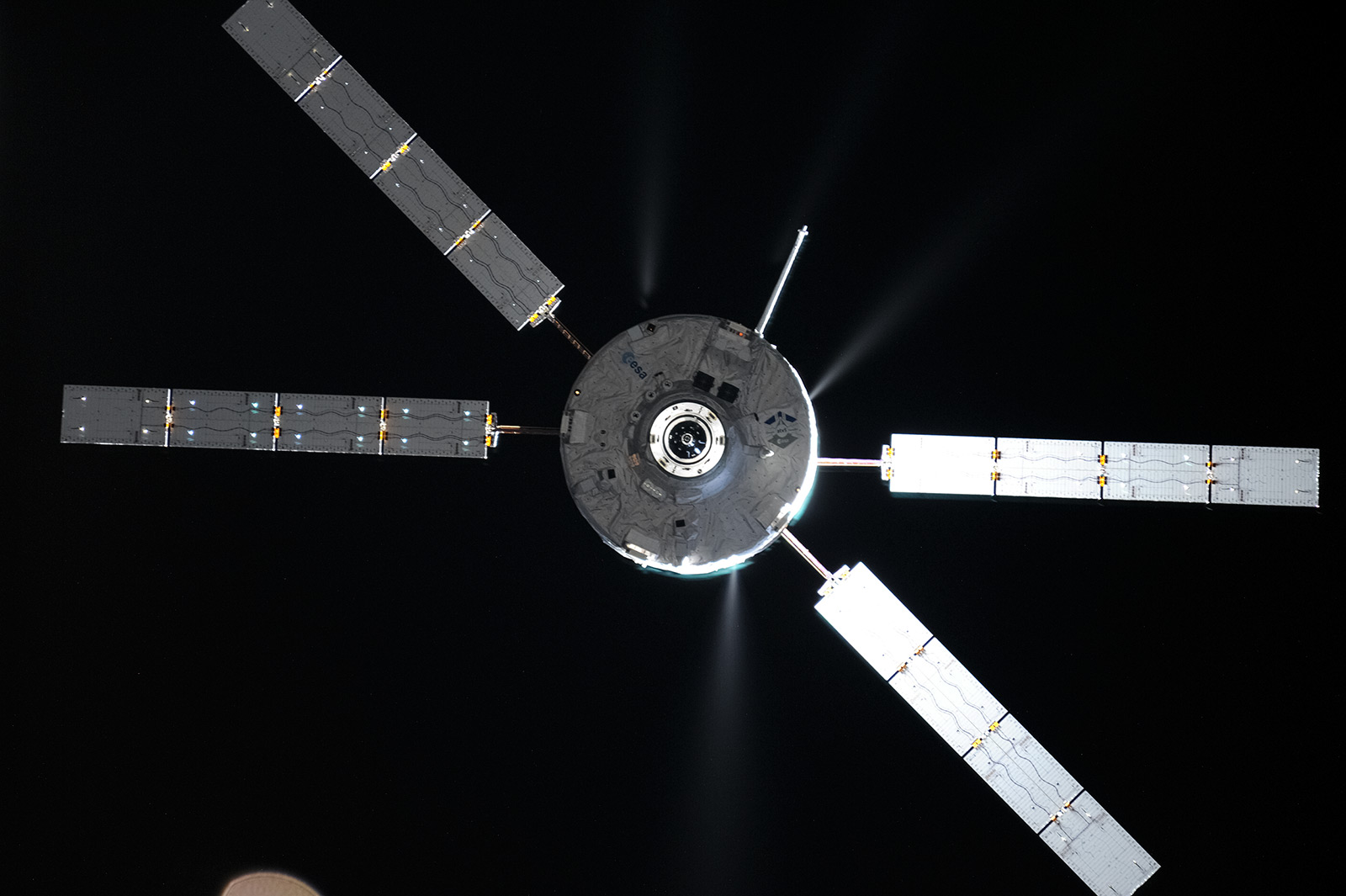
ATV-3 LEOP and approach to the ISS -- animation showing solar arrays unfolding and rotating, proximity (ATV-to-ISS) antenna boom deployment and GPS signal acquisition.

One minor issue was seen during the Launch and Early Orbit Phase (LEOP) -- it was noted that the ATV's Proximity Link Antenna Boom (the Antenna Deployable Boom or ADB) had correctly deployed, but the final sensor confirmation that the boom was locked into place was not received.

The antenna is used for direct communication and data synchronisation between the ATV and Station during rendezvous (more details on the Proximity Link System here).

(more...)

Perfect liftoff: The coming days will definitely be busy

Diary from a space project 24 March, Saturday, L+1

This sent in from ESA's Charlotte Beskow, deputy ATV team head, from Toulouse, yesterday, the day after ATV-3 launch and covers Friday and Saturday - Ed.

  • D0 -- 23 March: Launch (in the very early hours of the morning!)
    Solar arrays deployment: done
  • D+5 --28 March: Docking to the ISS set for late evening 28 March
    (22:34 UTC, which is 00:34 CEST on 29 March) so this is ~D-4.5
ESA/CNES mission controllers on console in ATV-CC 22 March Credit: CNES

ESA/CNES mission controllers on console in ATV-CC 22 March Credit: CNES

Update from Toulouse and the ATV-CC

23 March -- Early Friday morning

My alarm rings at 03:45... actually, I have been wide awake since 03:00, and I started by immediately checking the voice recorder of CNES. All is green! Quick breakfast before the taxi arrives. Outside it is cold and foggy.

I get to the CNES establishment in Toulouse (CST - Centre spatial de Toulouse - Ed.) at the same time as the Launch and Early Orbit Phase (LEOP) team shift. Everyone is exited! The final verification of GPS data and first mission plan were done from the expert's hotel lobby last night. All was OK. This morning it seems as if the weather will cooperate.

Engineering Support Team (EST) room at ATV-CC for ATV-3 launch Credit: ESA/C. Beskow

Engineering Support Team (EST) room at ATV-CC for ATV-3 launch Credit: ESA/C. Beskow

How do we know who is where?  Easy: we have a multi-coloured Excel spreadsheet posted at the exit of the room (see photo below)! Each technical/engineering function has a colour and each person has a line!

(more...)