Monthly Archives: April 2012

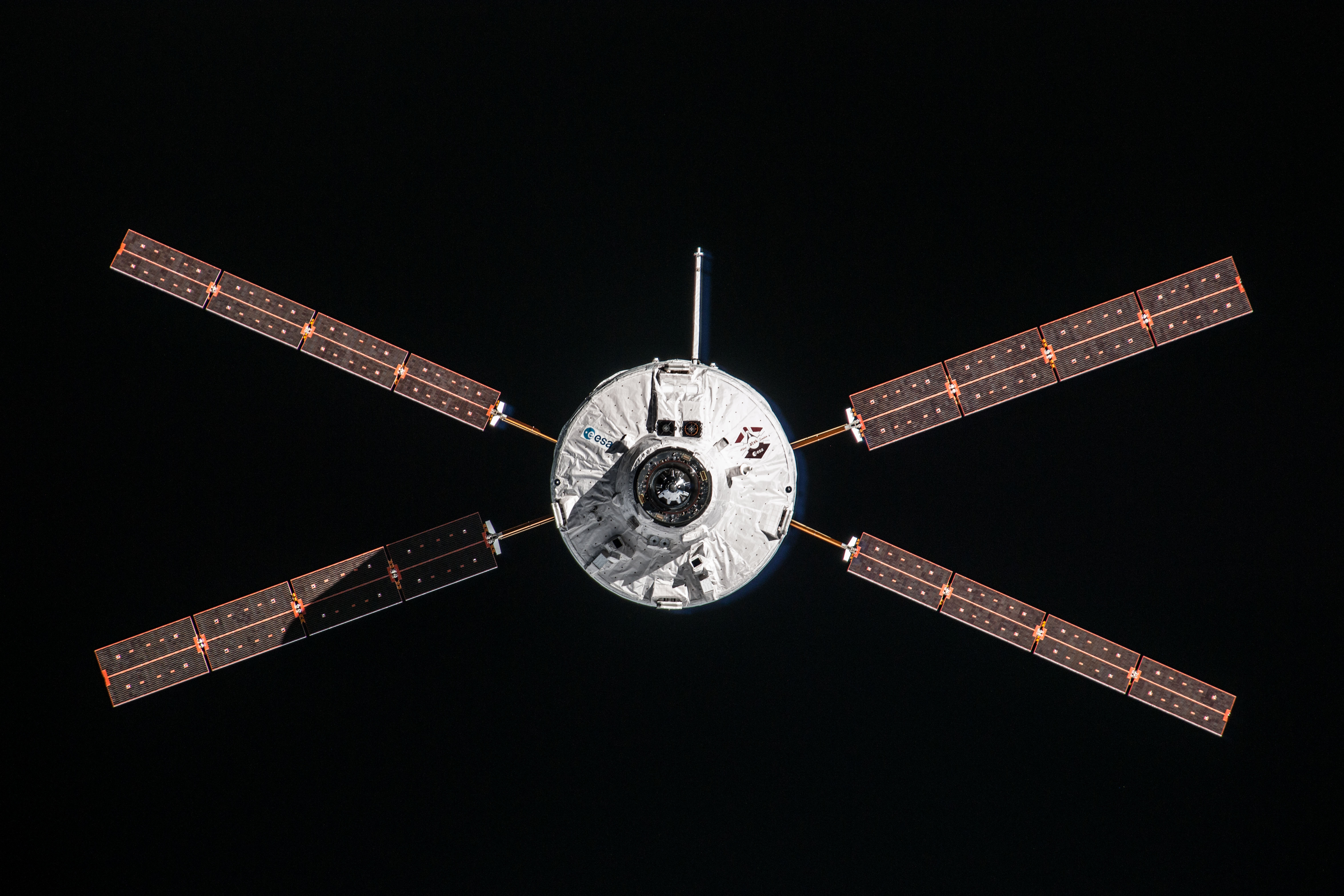
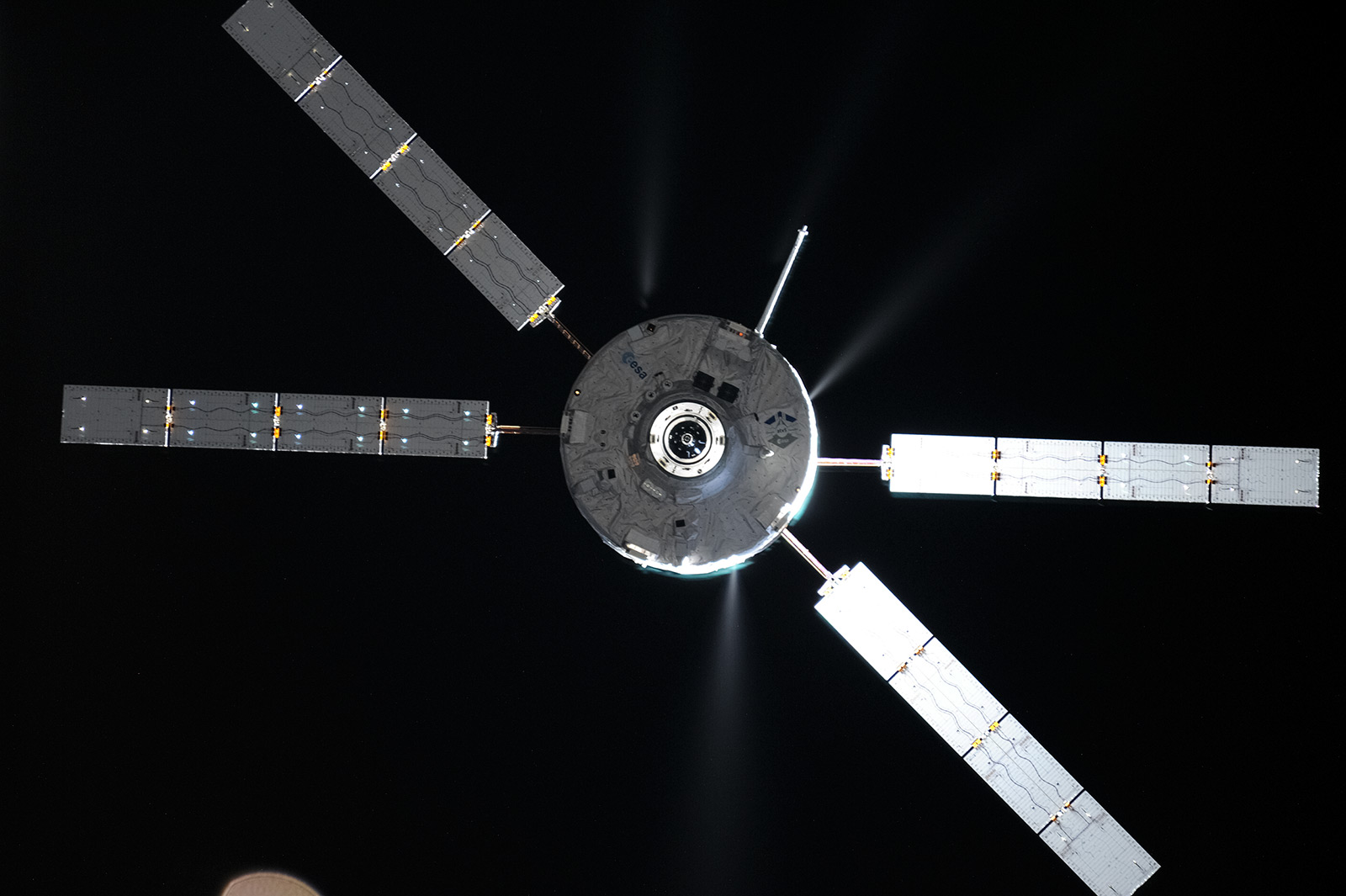
ATV-3 as seen by Expedition 30 crew after departure from ISS

The Soyuz TMA-22 spacecraft carrying Expedition 30 Commander Dan Burbank and Flight Engineers Anton Shkaplerov and Anatoly Ivanishin landed in Kazakhstan at 13:45 CEST. They undocked from the International Space Station at 10:18 CEST, officially ending their stay.

The Soyuz performed a deorbit burn at 12:49 CEST before the descent module separated from the rest of the Russian spacecraft and entered the Earth’s atmosphere. Afterwards, the Soyuz deployed several parachutes, slowing its descent, and then fired three small engines to soften its landing.

ATV-3 seen by Expedition 30 crew from Soyuz TMA-22 just after undocking from ISS. Credit: NASA TV via @star_max76

ATV-3 seen by Expedition 30 crew from Soyuz TMA-22 just after undocking from ISS. Credit: NASA TV via @star_max76 (Quentin Déhais)


Best wishes for safe journey home

Best wishes for safe journey home

Expedition 30 Commander Dan Burbank and Flight Engineers Anton Shkaplerov and Anatoly Ivanishin have said their farewells, entered the Soyuz TMA-22 spacecraft and closed the hatches at 7:12 CEST. They will undock from the International Space Station at 10:18 CEST, ending Expedition 30 and landing in Kazakhstan three and a half hours later.

Via NASA

ATV pumps up Station – all cargo air now delivered

ESA's Mike Steinkopf at ATV-CC has just sent in a note reporting on the (final) air transfer from ATV-3 to the ISS. The transfer ran overnight and finished early this morning as most of us were struggling to find the 'snooze' button on our alarm clocks:

The air transfer started on Thursday, 26 April, at 23:15 CEST and finished Friday, 27 April, at 06:00 CEST. This is the last air transfer from ATV-3 Gas Tank No. 1, and it basically has emptied the ATV gas tank.

The estimated transfer mass was 4.3 kg, resulting in an increase in the ISS internal air pressure of 3.2 mm Hg.

The remaining gas in ATV Gas Tanks No. 2 & 3 is is 33kg (each) of O2 to be transferred to ISS in the near future.

ATV performs ISS reboost

Yesterday at 14:13 CEST, ATV-3 performed a one-burn ISS reboost using the vessel's Orbit Correction System (OCS) thrusters. The burn ran 16:08 min:sec and provided an increase in Station orbital velocity by 2.3 m/second. This was expected to result in a mean altitude increase of 4.1 km.

The burn set up the Station's orbit ('phased') for the launch of Soyuz 30S, set for mid-May.

Prior to the burn, ESA astronaut André Kuipers closed the protective shutters of the US orbital segment (the Lab, Node-3/Cupola and Kibo module) windows.

Details via NASA

This week: What’s up with ATV?

A quick forecast of on-orbit activities for ATV-3 this week and into the weekend.

Operations forecast week 23-28 April

  • 23 April: Free drift for Russian vehicle thruster test (ATV solar arrays will be 'feathered')
  • 24 April: Regular ATV cargo operations
  • 25 April: Reboost manoeuvre No. 2
  • 26 April: 'Inflate the Station' - gas transfer No. 3 (empty ATV's air tank)
  • 25/26 April: Regular ATV cargo operations
  • 27 April: 28S undocking (ATV solar arrays feathered)
  • 27 April: Regular ATV cargo operations
  • 28 April: Reboost manoeuvre No. alternate slot (if needed)

And a quick overview of cargo transferred so far during the ATV-3 mission

  • Cargo status: 63% transferred
  • Accepted trash: 241kg so far
  • Air status: Remain 5.5kg (84% transferred)
  • Oxygen (O2) status: No transfer so far
  • Water: 66 liters (23%) transferred so far
  • Refuelling: No transfer so far
  • Propellant status (ATV's own fuel): around 1073 kg used, around 3035 kg available for ISS reboost & attitude control

Video tour inside ATV-3

ESA astronaut André Kuipers and cosmonaut Oleg Kononenko open the hatch and start unloading ESA's supply ship Automated Transfer Vehicle 'Edoardo Amaldi' in this video produced by ESA TV. The Automated Transfer Vehicle docked with the International Space Station on 29 March 2012 delivering around two tonnes of dry cargo, 285 kg of water and more than three tonnes of propellants.

Training for SpaceX Dragon arrival

On 11 April 2012, NASA astronaut Don Pettit (right) and European Space Agency astronaut André Kuipers, both Expedition 30 flight engineers, conduct the first of three sessions on the ROBoT simulator in preparation for the arrival of the SpaceX Dragon.

NASA astronaut Don Pettit (right) and European Space Agency astronaut Andre Kuipers, both Expedition 30 flight engineers, conduct the first of three sessions on the ROBoT simulator in preparation for the arrival of the SpaceX Dragon. Credit: ESA/NASA

NASA astronaut Don Pettit (right) and European Space Agency astronaut Andre Kuipers, both Expedition 30 flight engineers, conduct the first of three sessions on the ROBoT simulator in preparation for the arrival of the SpaceX Dragon. Credit: ESA/NASA

The simulator is located in the International Space Station's Destiny laboratory. 

Slated for liftoff on 30 April 2012, at 18:22 CEST from Kennedy Space Center, the goal of Dragon's planned 21-day mission will be to test the unpiloted capsule's ability to rendezvous with the space station.

Expedition 30 crew hanging out in ATV

On 15 April 2012, Expedition 30 crew members posed for an in-flight crew portrait in the European Space Agency's Automated Transfer Vehicle Edoardo Amaldi (ATV-3) currently docked with the International Space Station. 

Expedition 30 crew members pose for an in-flight crew portrait in the European Space Agency's "Edoardo Amaldi" Automated Transfer Vehicle-3 (ATV-3) Credit: NASA

Expedition 30 crew members pose for an in-flight crew portrait in the European Space Agency's "Edoardo Amaldi" Automated Transfer Vehicle-3 (ATV-3) Credit: NASA

From the left are NASA astronaut Dan Burbank, commander; along with European Space Agency astronaut André Kuipers, Russian cosmonauts Anton Shkaplerov, Oleg Kononenko, Anatoly Ivanishin, and NASA astronaut Don Pettit, all flight engineers.

ATV: Van Nederlandse makelij

With ATV-3 securely docked to the Space Station and Dutch ESA astronaut André Kuipers in charge of unpacking it is only fitting that we continue our investigation of ATV’s European origins with a post on The Netherlands’ contribution to ATV.

ATV Solar panels

The solar panels, providing all the power to ATV, are supplied by Leiden-based company Dutch Space. The panels weigh 160 kg and are over 22 meters long when unfurled. Dutch Space also supplies the solar panels for the future constellation of Galileo satellites.

While unpacking, André will be pleased to know that ATV’s ventilation system is provided by Bradford Engineering. Despite the English sounding name, Bradford Engineering is based in the Netherlands, near the Belgian border. The ‘Cabin Fan Assembly’ assures that air is properly circulated in the ATV. (more...)

A sunny day onboard ATV-3

A fun photo showing ESA astronaut André Kuipers inside ATV-3! Via Twitter (@lionelferra). Now we're super-curious to know why astros wear sunglasses in space (we have a theory or two...). Do you know why?